
Article
Methylene blue and fasting: what the autophagy studies show
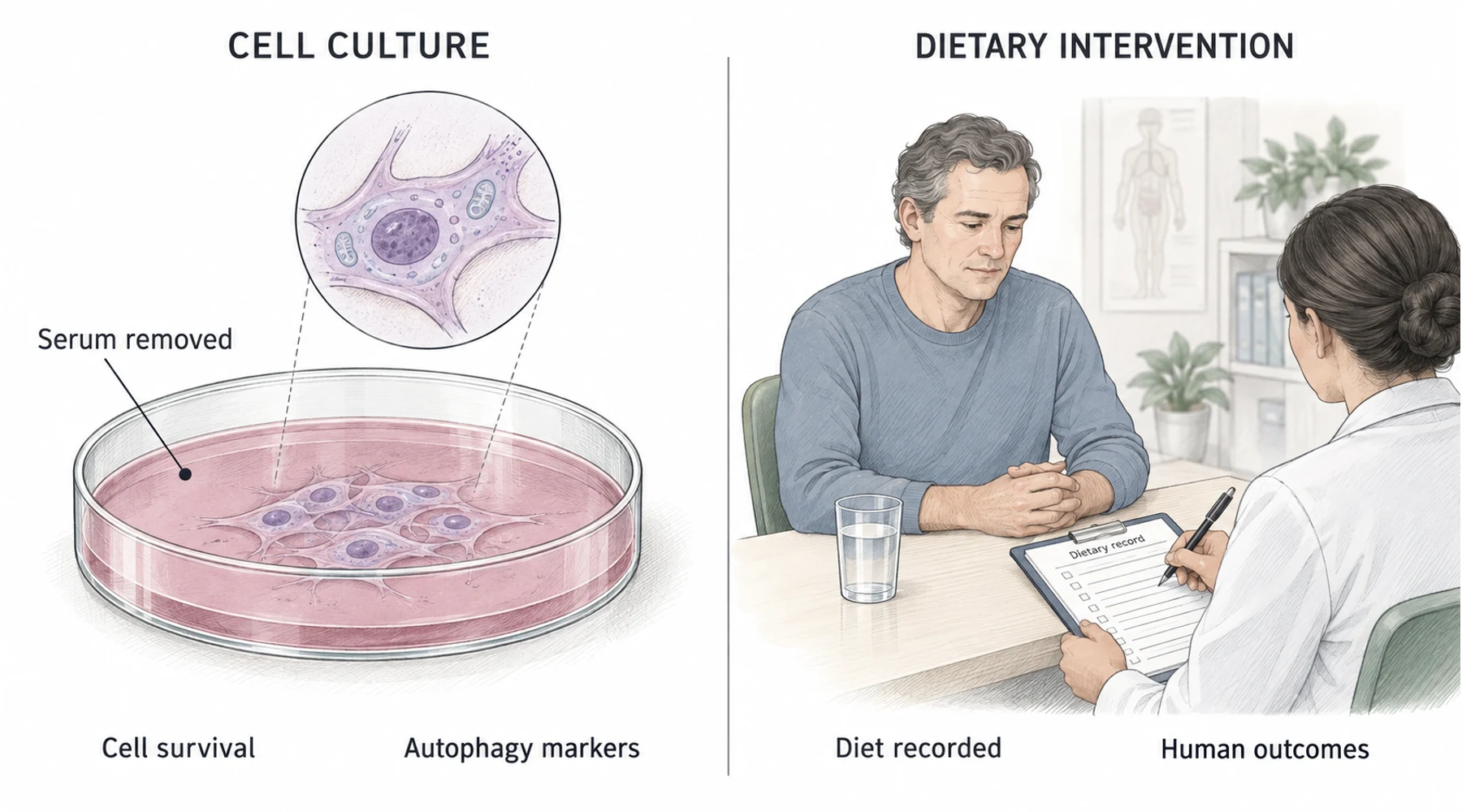
Methylene blue has been studied in cells exposed to nutrient-related stress. That does not establish that taking it during intermittent fasting improves health. In the sources examined for this article, we did not locate a controlled human trial demonstrating an autophagy or clinical benefit from combining methylene blue with fasting.
There are three separate questions: what a laboratory experiment measured, whether a preparation fits a particular definition of fasting, and whether taking it without food changes its absorption or tolerability. A positive answer to one cannot answer the others.
What serum deprivation means in the cited experiment
In Xie and colleagues' 2013 neuronal-cell study, researchers used HT22 cells, a mouse hippocampal cell line. They replaced serum-supplemented culture medium with serum-free DMEM. The cells remained in laboratory medium; they were not transferred into plain water.
Methylene blue reduced serum-deprivation-associated apoptosis, a form of programmed cell death. The researchers also measured LC3B staining and protein levels, investigated the autophagy-related protein p62, and used inhibitors to test the proposed mechanism. Their results implicated AMPK signaling without the mTOR inhibition sometimes assumed in online accounts. Separate mouse experiments examined brain tissue after methylene blue treatment.
Serum removal changes the mixture supporting cultured cells, including growth-supporting components. It does not reproduce the coordinated hormonal, digestive, and tissue responses of a person missing meals. Nor does improved survival of this cell line establish a desirable effect in every cell type or disease.
Claim-to-study map
This map separates the intervention from the endpoint. The study name is less useful than knowing what was changed and what was counted.
| Claim being evaluated | Actual model or required comparison | Measured endpoint | What the evidence can support |
|---|---|---|---|
| “Methylene blue helps fasting cells.” | Xie 2013: mouse HT22 cells exposed to serum withdrawal, with and without methylene blue | Apoptosis, viability and autophagy-related readouts | Protection under that culture condition; no human fasting outcome |
| “It activates an energy pathway, so it mimics fasting.” | Atamna 2015: cultured human IMR90 fibroblasts treated with methylene blue | NAD/NADH ratio, AMPK phosphorylation, mitochondrial enzyme activity and senescence-related endpoints | A cellular response to the compound; no dietary intervention |
| “Fasting research proves the combination works.” | DIRECT trial: selected breast-cancer patients receiving chemotherapy, comparing a fasting-mimicking diet with usual diet | Treatment toxicity and tumor-response measures | Evidence about a dietary adjunct to chemotherapy; methylene blue was not the tested adjunct |
| “The two interventions are synergistic.” | A comparison including neither intervention, each alone, and both together | The same predefined endpoint across groups, with an interaction analysis | A test of whether their combined effect exceeds the expected separate effects; not established by the studies above |
| “It will not break my fast.” | Exact preparation, ingredients and the relevant fasting rules | Ingredient quantities or compliance with those rules | A formulation or definition answer; no measurement of autophagy |
The map is an original synthesis of the studies discussed here. Its final two rows describe the evidence a claim would require, rather than reporting completed experiments.
AMPK activation is not a fasting outcome
The other commonly cited paper, Atamna and colleagues' 2015 study of energy and cellular-defense pathways, used human fibroblasts grown outside the body. It reported a transient change in AMPK phosphorylation, changes in mitochondrial complex-IV activity, and reduced telomere erosion in treated cultures. These are cellular measurements. The word “human” describes the origin of the cells, not people enrolled in a fasting trial.
An energy-sensing pathway can respond to more than one stimulus. Detecting that response does not make the stimuli interchangeable. Evidence that methylene blue changes AMPK and evidence that dietary restriction affects metabolism do not show that the combination is beneficial, additive, or synergistic. Claims about lifespan also need their own endpoints, as explained in methylene blue and longevity evidence.
Autophagy itself is a process in which cellular material is delivered for lysosomal breakdown and recycling. Its activity cannot be reduced to a supplement's calorie label. The autophagy assay guidelines distinguish the number of autophagic structures from autophagic flux, the passage of material through the entire process. More structures can reflect increased formation or delayed clearance. A single marker cannot resolve that difference.
Our explanation of methylene blue, AMPK and autophagy experiments examines those measurements in more detail.
Will methylene blue break a fast?
There is no preparation-independent yes or no. “Methylene blue” names an active substance, not a complete ingredient list or a nutritional analysis.
- For a strictly water-only definition, a methylene blue preparation is an addition to water. Calling it calorie-free does not make it plain water.
- For a calorie-based rule, inspect the exact formulation. Sugar, syrup, oil, or other energy-containing carriers must be considered in their actual amounts. Do not assign a calorie value from the color, concentration percentage, or active ingredient name alone.
- For an “autophagy fast,” neither the absence of added sugar nor a small stated calorie amount establishes what happens to autophagic flux in a person's tissues.
- For a medical test, follow the testing service's instructions. MedlinePlus guidance on fasting for blood tests specifically separates plain-water intake from medication decisions and advises against stopping medicines without the provider's direction.
An absorption claim requires a different experiment: the same formulation compared under specified fed and fasted conditions, with blood concentrations measured over time. Feeling an effect sooner does not establish greater absorption. See methylene blue absorption and distribution for route-specific evidence. The cell studies above do not establish an administration-with-food rule.
Fasting plus methylene blue cannot replace cancer treatment
Reports of less pain while fasting cannot establish tumor shrinkage or longer survival. When multiple substances, dietary changes, and pain medicines change together, a personal account cannot identify which intervention caused an improvement.
There is real research on dietary interventions during cancer care. The randomized phase 2 DIRECT trial studied a fasting-mimicking diet alongside neoadjuvant chemotherapy in patients with HER2-negative stage II/III breast cancer. It found no difference in toxicity between groups and reported some favorable response analyses. These findings concerned a selected patient population and a dietary adjunct. They did not test methylene blue, demonstrate the efficacy of water fasting, or establish a replacement for chemotherapy.
Do not delay or replace prescribed cancer treatment with this combination. For someone losing weight or struggling to eat, further restriction can conflict with treatment needs. The National Cancer Institute's nutrition guidance explains why adequate calories and protein, nutritional assessment, and individualized support matter during cancer treatment.
Methylene blue also has drug risks independent of fasting. The PROVAYBLUE prescribing information warns about serotonin syndrome with serotonergic medicines and opioids and contraindicates its use in G6PD deficiency. That injectable-product label does not validate a consumer oral preparation or a fasting regimen. Bring the exact product and medication list to the treating team before considering use.
When evaluating a new claim, identify the model, intervention, comparator, and endpoint using the guide to reading methylene blue research. A claim about fasting people needs evidence from fasting people, and a claim about the combination needs evidence that actually tests the combination.