
Ingredient batch is identified
The sample is linked to the methylene blue ingredient batch it came from before the test results are interpreted.
Blupreme’s quality standard is built around batch-specific records. The shared Dropbox records link the Blupreme batch number on the bottle to the methylene blue ingredient batch number and its laboratory certificate of analysis (COA).
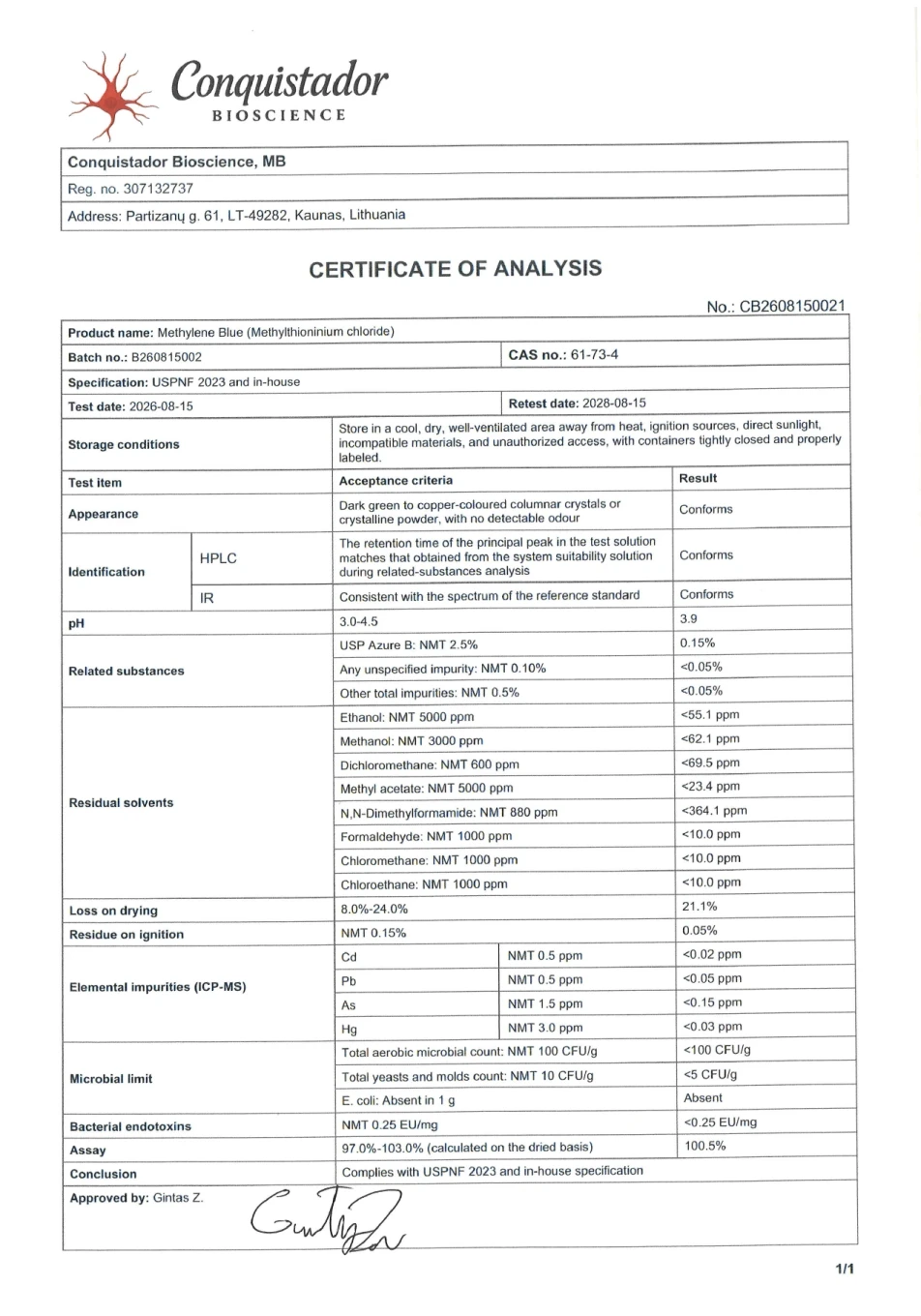
Use the shared batch records to find the ingredient batch associated with the batch number on your bottle. Then open that ingredient batch’s COA. The COA shows the tested material, specifications, dates, and results.
USP stands for United States Pharmacopeia, and NF stands for National Formulary. Together, USP–NF publishes pharmaceutical quality standards, including specifications for the identity, strength, quality, and purity of materials.
A USP-grade claim means the material meets all applicable USP–NF requirements. For methylene blue, this includes the applicable monograph and general requirements, not just a heavy-metal screening panel. Review the specifications and batch documentation to understand what was tested.
Read the USP–NF General Notices and RequirementsEvery batch is evaluated against the same defined identity, composition, impurity, and contaminant specifications. Batch-specific records are available through the shared data folder.
The Dropbox batch records link each Blupreme product batch to its ingredient batch and the reviewed test results for that ingredient batch.
The sample is linked to the methylene blue ingredient batch it came from before the test results are interpreted.
Tests cover identity, assay, organic impurities, and the contaminants listed in the testing specification.
Reported values are reviewed against the ingredient specifications for that batch.
The Dropbox batch records link the approved ingredient COA to the Blupreme product batch.
Open the shared Dropbox folder. Use the batch records to find the ingredient batch number associated with the batch number on your bottle. Then open the certificate of analysis for that ingredient batch.
Find the Blupreme batch number on the bottle or packaging.
Find your Blupreme batch number in the Dropbox batch records. Note the associated methylene blue ingredient batch number.
Open the COA with that ingredient batch number.
A certificate of analysis, or COA, is a batch-specific laboratory document. It identifies the tested material, batch number, quality specifications, test results, and whether the batch met the stated requirements.
The tested material’s identity, batch number, specifications, test results, methods, and whether the ingredient batch met the stated specifications.
Hazards, first aid, storage, handling, transport, and disposal information.
Which tests are performed, why they are needed, how often they are performed, and who performs them.
Use the Dropbox batch records to find the ingredient COA associated with the Blupreme batch number on your bottle.
Always check that the COA is associated with the batch number on your bottle.