
Article
How to remove methylene blue stains from surfaces and fabrics
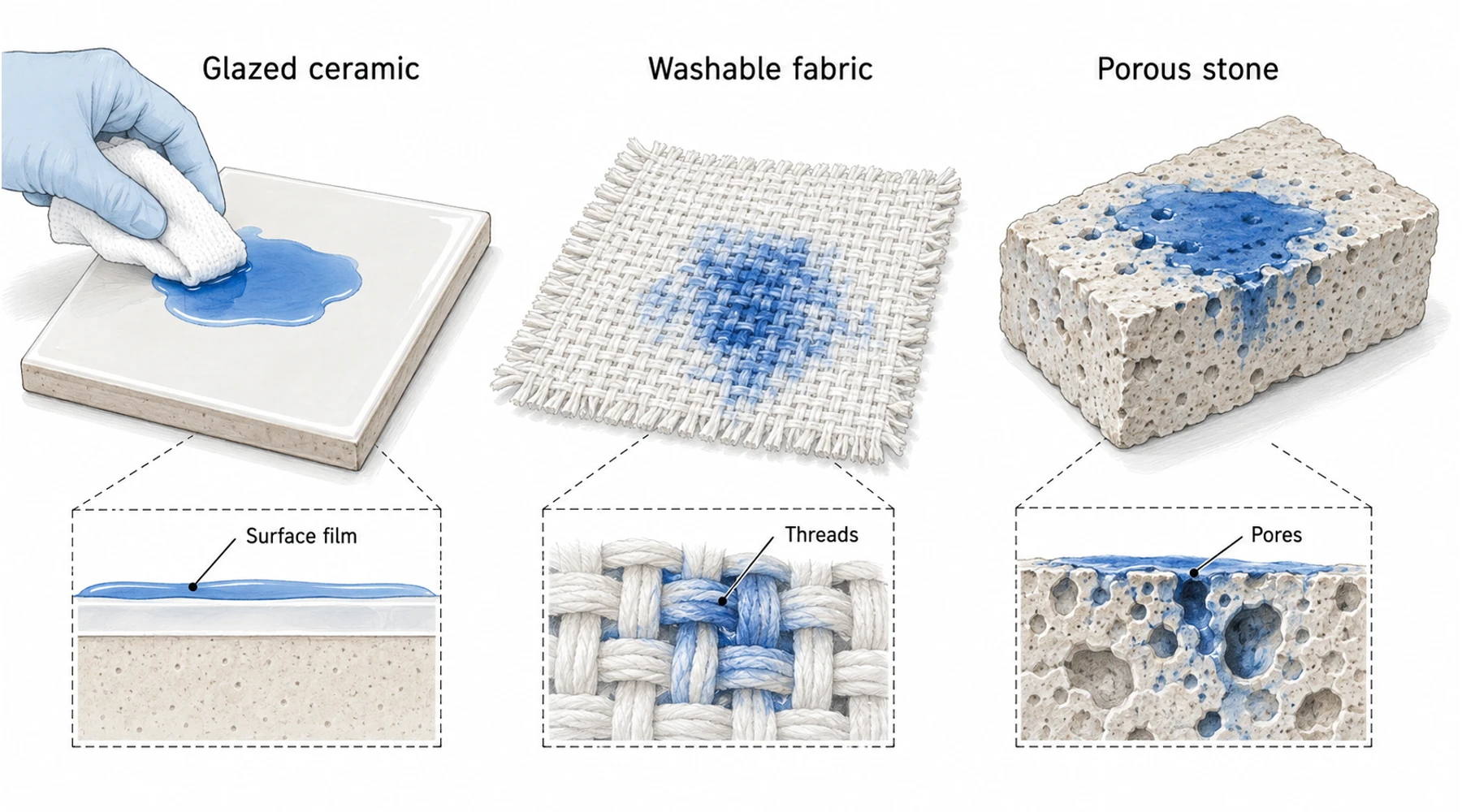
Blot a fresh methylene blue spill with a clean white absorbent cloth, then identify the material before choosing a cleaner. The safest useful starting point is the cleaning method already permitted by that material's manufacturer. A blue stain on glazed ceramic, a cotton shirt, and porous stone does not justify the same treatment.
There is no verified universal household recipe in the sources used here. This guide combines material-care instructions with a small-area testing method. It does not promise complete removal from every finish or fabric.
First, contain the spill
Keep children and pets away from the affected area. Wear the gloves specified by the dye and cleaner labels, and prevent contaminated cloths from touching clean surfaces. Blot rather than spread the liquid. For an unidentified laboratory staining mixture, consult its safety data sheet before applying water or a household cleaner: the bottle may contain more than methylene blue.
Do not apply household stain removers to skin, teeth, or the mouth. Those questions belong to methylene blue discoloration of urine, tongue, and teeth. If an exposure involves symptoms rather than just a stained object, use the separate methylene blue safety guide.
Choose the method by material
| Material | Initial approach | Escalation boundary |
|---|---|---|
| Intact glazed ceramic sink or toilet bowl | Use its approved mild cleaner and a non-scratching cloth, sponge, or brush | Check the exact fixture instructions before using a stain remover or descaler |
| Natural stone, including marble and limestone | Blot, use an approved neutral stone cleaner, rinse, and dry | Ask the stone supplier about remaining dye; avoid acidic household remedies |
| Identified high-pressure laminate | Mild detergent and a damp non-abrasive cloth; remove residue and dry | Use solvent treatment only where that laminate manufacturer explicitly permits it |
| Washable, colorfast cotton or synthetic fabric | Follow the care label; use compatible detergent pretreatment and wash separately | Consider a labeled oxygen stain remover only if both garment and product instructions permit it |
| Wool, silk, leather, dry-clean-only fabric, or unidentified upholstery | Blot free liquid without rubbing; consult its care instructions | Use a textile or upholstery professional when the permitted method is unclear |
These are starting conditions, not rankings of cleaning effectiveness. Coatings, seams, prints, backing materials, and previous damage can change the answer even when two objects share the same base material.
Removing a methylene blue stain from a toilet bowl
First distinguish blue water from a mark remaining on the bowl. Flush away ordinary discolored toilet water, then inspect the surface. Do not use the toilet to dispose of concentrated dye or laboratory waste.
For a remaining stain, locate the toilet model's care instructions. For example, the TOTO RS bowl maintenance manual specifies neutral toilet detergent with a cleaning sponge or brush, and excludes strongly acidic or alkaline cleaners, abrasive compounds, wire brushes, and abrasive nylon brushes. That is a concrete reason to reject a universal recommendation for strong bleach or abrasive scrubbing.
Apply one permitted product for its labeled contact time, clean gently, and rinse or flush as directed. Do not extend contact time to an overnight soak unless the instructions allow it. Keep bowl products away from the seat, hinges, electronics, and surrounding countertop unless approved for those components too.
If the stain remains, ask the fixture manufacturer about a compatible next treatment. A blue mark alone does not prove that limescale remover is needed. Roughness, dull patches, or a visibly damaged glaze are reasons to stop scrubbing.
Natural stone and countertops
The Natural Stone Institute's care guidance recommends prompt blotting, mild cleaning, thorough rinsing, and drying. It explains that marble and other calcium-carbonate-rich stones are acid sensitive, and that sealers improve stain resistance without making stone stain proof.
Use an approved neutral stone cleaner first. Avoid vinegar, lemon juice, and toilet-bowl descalers on natural stone. A pale area after cleaning may be etching rather than successful dye removal. For persistent staining, give the stone supplier the dye label, stone type, sealer details, and photographs. A product selected for pale stone may be unsuitable for dark stone or its finish.
For laminate, Formica's maintenance guidance supports water and mild detergent, and permits certain solvents for specified ink marks. That permission is specific to its laminate guidance. It is not evidence that acetone is safe on an unidentified countertop, acrylic bath, painted surface, or furniture finish, or that it reliably removes methylene blue. Start with the verified care method and keep liquids out of vulnerable seams.
Washable clothing, carpets, and upholstery
Check the fiber composition and care label first. The American Cleaning Institute's laundry guidance recommends testing pretreatments in a concealed area, blotting rather than rubbing, and laundering the whole garment after treatment to remove residues. Treat the stained garment separately so that released blue dye does not transfer to other items. Inspect the result before choosing further treatment.
For a compatible washable item, follow a detergent's pretreatment directions and wash at the garment's permitted temperature. If that is insufficient, a labeled oxygen stain remover is an option to evaluate, not an established methylene-blue-specific solution. For example, OxiClean Versatile Stain Remover directions require a concealed-area test and separate procedures for laundry, water-washable rugs, and water-washable upholstery. A removable cushion cover is not automatically machine washable.
The manufacturer's fabric exclusions include wool, wool blends, silk, silk blends, leather, and dry-clean-only items for its powders. “Oxygen” and “color safe” do not override those restrictions. If water or cleaning solution lifts the original fabric color onto a white test cloth, stop.
Never combine cleaners to chase the last blue trace
The CDC's bleach guidance warns against mixing bleach with other cleaners or disinfectants. This includes acidic toilet cleaners, vinegar, and ammonia-containing products. Use products only in the combinations explicitly permitted by their labels, such as a laundry additive used with detergent as directed; do not improvise mixtures.
A toilet may already contain a cleaner from a tank tablet or rim block. If you cannot identify what is present, do not add another chemical. Remove residues only as directed by the existing product and fixture instructions before considering a change. If accidental mixing produces irritating fumes, leave the area for fresh air and seek poison-center advice; breathing difficulty requires emergency help.
Document a small-area test before treating more
Use the downloadable small-area test record to record the actual material, product, method, and photographs.
- Check compatibility on an unstained hidden area. Follow the cleaner's test instructions and evaluate it after the specified drying period. Stop for color loss, roughening, swelling, or altered gloss.
- Photograph the stain before treatment. Include an adjacent clean area and a ruler. Keep lighting, camera distance, and viewing angle consistent.
- Treat a small stained area with one approved method. Record dilution, contact time, tool, and rinsing exactly. Do not create a new stain to test a valuable item.
- Compare after rinsing and drying. Photograph from the same position. Record remaining blue and changes in the underlying material separately. A lighter stain with a damaged finish is an unsuccessful treatment.
Published self-cleaning cotton experiments used titanium-dioxide and porphyrin coatings under visible light. Their stain-degradation results do not establish that sunlight, a household cleaner, or an untreated shirt will behave the same way. Your record should describe what happened to your particular item, without turning a photograph into an unsupported percentage-removal claim.