
Article
Methylene blue poisoning and overdose: what needs urgent assessment
After a suspected serious methylene blue exposure, seek professional assessment immediately. Do not wait for symptoms or calculate a supposedly safe overdose. If the person collapses, has a seizure, has difficulty breathing, or cannot be awakened, call your local emergency number. In the United States, call 911 for these emergencies; otherwise, contact Poison Control at 1-800-222-1222 promptly for exposure advice. These escalation signs follow the National Capital Poison Center's first-aid guidance.
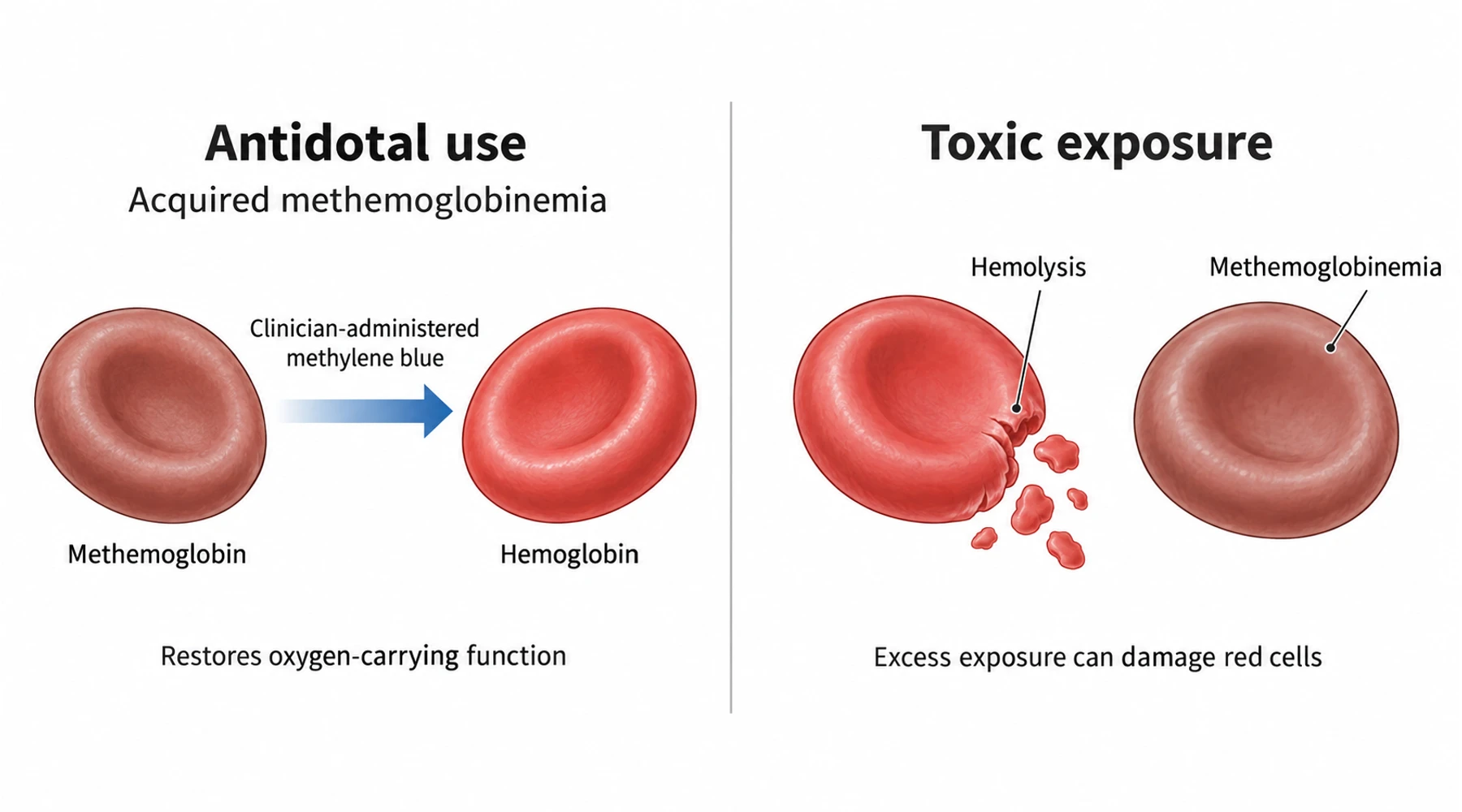
The phrase “methylene blue poisoning” can describe two different situations: poisoning for which a clinician uses methylene blue, and harm caused by methylene blue itself. Confusing them can lead someone to take more of the very substance that needs assessment.
An antidote for a specific blood disorder
Hemoglobin inside red blood cells delivers oxygen to tissues. In methemoglobinemia, an abnormal proportion is present as methemoglobin, impairing oxygen delivery. The MedlinePlus explanation of methemoglobinemia distinguishes inherited forms from acquired disease caused by exposures such as certain medicines or chemicals. Symptoms can include blue skin, breathlessness, and changes in alertness.
Intravenous methylene blue is a treatment for acquired methemoglobinemia. Its purpose is to help restore functioning hemoglobin. That is a specific clinical indication, not a general treatment for any poisoning or any appearance of blue skin. The guide to methylene blue for methemoglobinemia explains that treatment context.
| Question | Antidotal use | Suspected toxic exposure |
|---|---|---|
| What is the starting problem? | Acquired methemoglobinemia diagnosed and assessed by clinicians | An exposure to methylene blue that may cause harm |
| What role does methylene blue have? | A medicine selected for a specific indication | A substance clinicians must consider as a possible cause of illness |
| What information matters? | Diagnosis, patient factors, treatment response | Product, route, amount, timing, symptoms, and other medicines |
| What should a reader do? | Follow the treating team's instructions | Contact a poison center or emergency service promptly |
This distinction remains important when the original exposure was intentional and described as a supplement or wellness treatment. A reason for taking a substance does not establish the safety of the exposure.
What toxicity can look like
The National Capital Poison Center's methylene blue guidance describes nausea, headache, dizziness, and blue discoloration, as well as the paradox that high doses can cause methemoglobinemia. Blue urine by itself does not measure the severity of an exposure. Likewise, new blue lips with breathlessness must not be dismissed as dye staining.
Serotonin toxicity is another concern, particularly with interacting medicines. Fever, agitation or confusion, sweating, a rapid heartbeat, and muscle rigidity can occur together. New symptoms after exposure warrant urgent assessment; a reader should not try to establish the diagnosis from a checklist.
The PROVAYBLUE prescribing information also describes hemolysis, meaning red-cell breakdown, and serious allergic reactions. G6PD deficiency is a contraindication because of hemolytic-anemia risk. Anemia may appear a day or more after treatment. Chest pain, wheezing, or reduced oxygenation are among reported overdose effects. Feeling well immediately after an exposure therefore cannot establish that later problems will not occur.
The label warns about serotonergic medicines and opioids, including a risk with dextromethorphan. Give professionals the complete medication list. The explanation of G6PD deficiency and methylene blue describes another reason individual circumstances matter.
Why the route changes the question
Swallowing a solution, receiving an injection, splashing an eye, and inhaling powder are different exposure histories. Report the actual route, even when it differs from the product's intended use. “Two drops” is incomplete without knowing which bottle was used; “one syringe” is incomplete without the concentration and volume. The guide to interpreting methylene blue dose units explains those measurement distinctions.
Poison Control's explanation of exposure and overdose terminology makes a useful distinction: an exposure describes contact with a potentially harmful substance, while poisoning describes harmful effects. Calling about an exposure does not require proving that poisoning has occurred. Route, amount, timing, and symptoms help professionals decide what assessment is needed.
For an eye splash, start rinsing with room-temperature water immediately for 15–20 minutes and remove contact lenses. For skin contamination, remove affected clothing and rinse with running water for at least 15 minutes. After inhalation, move to fresh air without entering an unsafe area. Obtain poison-center guidance during or after these first-aid measures. Do not induce vomiting after swallowing a product. First aid must not delay emergency help for serious symptoms.
Exposure-information checklist
Use these prompts during the call. Do not postpone calling to complete the table. Read labels exactly; mark an uncertain detail as unknown instead of guessing. A photograph can preserve a label without transferring the chemical to another container.
| Information to report | Details to record or read aloud |
|---|---|
| Person and present condition | Age; approximate weight if known; awake and responding or not; breathing normally or not; current location |
| Exact product | Name and manufacturer; concentration and units as printed; ingredients; bottle size; intended use; label photograph or original container |
| Exposure event | Swallowed, injected, eye, skin, or inhaled; time or best estimate; single event or repeated exposures; estimated amount and how it was measured |
| Symptoms and changes | What happened first; when symptoms began; whether they are worsening; vomiting, breathing changes, confusion, fever, or muscle symptoms |
| Clinical context and actions | Medicines, supplements, and other substances taken; known G6PD deficiency; pregnancy; kidney or liver disease; rinsing or other actions already taken |
If an amount is uncertain, explain the evidence: for example, “The bottle was open and some liquid is missing; no one saw it swallowed.” This is more useful than converting uncertainty into a precise-looking dose. Keep the container available for the professional team if it is safe to do so.
There is no home antidote protocol
Do not take additional methylene blue, activated charcoal, or another substance to “neutralize” the exposure without professional direction. The NHS poisoning guidance advises immediate medical help for suspected poisoning, warns that symptoms can be delayed, and advises against inducing vomiting or giving food or drink while awaiting help. Treatment and observation depend on the substance and clinical findings.
The methylene blue label calls for monitoring of cardiopulmonary, blood, and neurological toxicity after overdose, with supportive measures as needed. It also notes that methylene blue can interfere with pulse-oximeter readings. A home oxygen reading cannot substitute for assessment.
There is a mechanistic reason that counting drops cannot resolve interaction risk. In Ramsay and colleagues' 2007 enzyme study, methylene blue inhibited purified human monoamine oxidase A, an enzyme involved in serotonin metabolism. These were laboratory assays, not a trial defining a safe oral amount or an overdose boundary. Clinical exposure advice must account for the actual product, route, patient, and other substances involved.