
Article
Methylene blue and migraine: treatment claims versus headaches after use
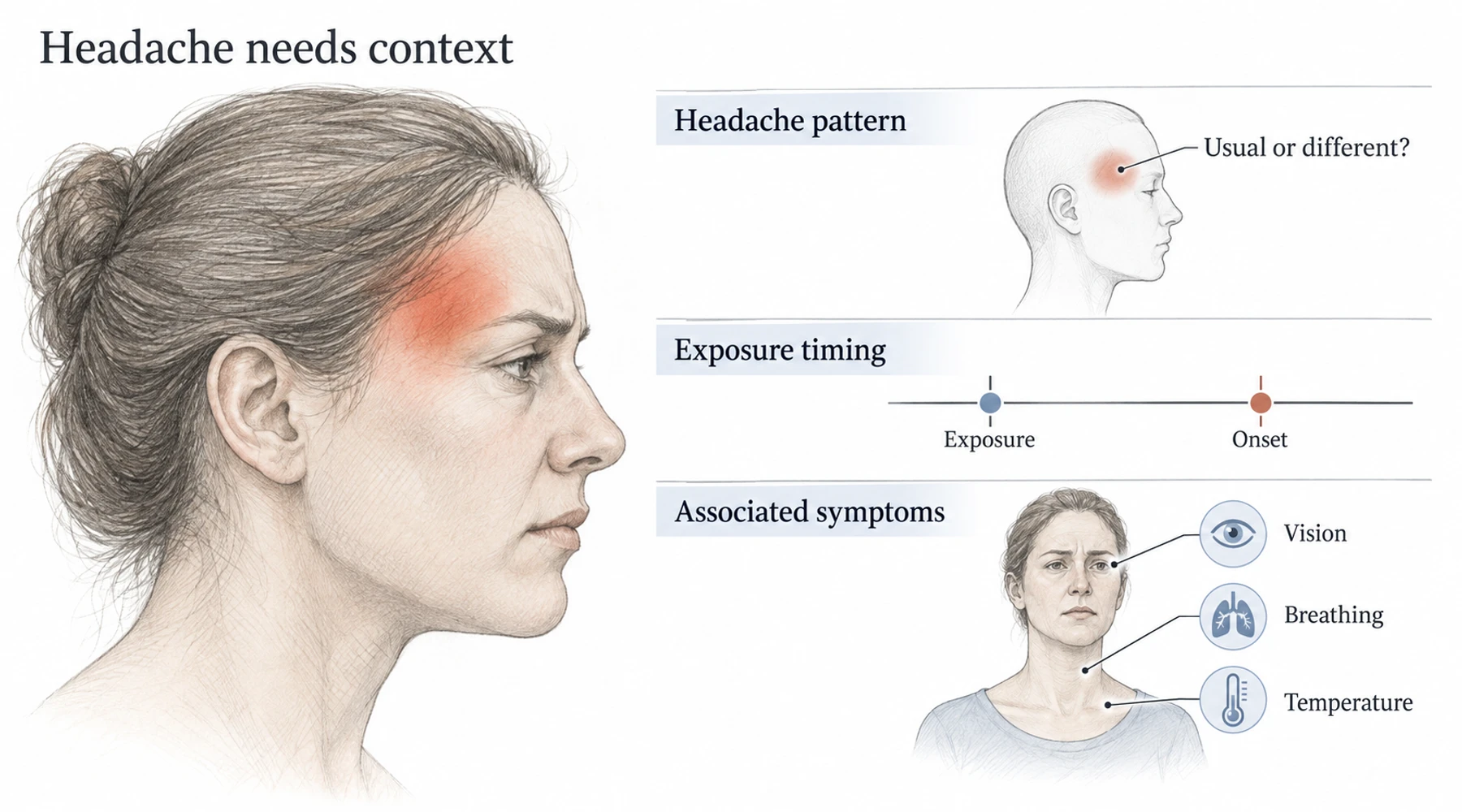
Methylene blue is not an established migraine treatment. The clinical literature located for this review does not provide a controlled trial demonstrating that it aborts migraine attacks, prevents them, or treats aura. Reports of headache relief and reports of headaches after use can both exist without establishing how methylene blue affects diagnosed migraine.
One reason for the confusion is that a headache can improve when its underlying cause is treated. Methylene blue treats acquired methemoglobinemia in hospital practice. That condition can itself cause a severe headache resembling migraine. A successful treatment in that setting answers a different question from whether a person with migraine should take methylene blue.
Get emergency help for a sudden, extremely severe headache, new weakness or difficulty speaking, loss of consciousness, or headache with breathing difficulty and blue or grey lips. Do not assume these symptoms are an expected adjustment to methylene blue. The NHS headache guidance identifies sudden severe pain and neurological symptoms as emergency features.
What the migraine claims actually show
The supplied discussions illustrate opposite experiences: one forum thread reports headaches after methylene blue, while another contains claims of relief near the beginning of an attack. These are reader observations, not clinical efficacy data. The latter discussion even describes uncertain solution strength, making the exposure difficult to interpret.
A useful treatment study would establish the migraine diagnosis, define the preparation and route, compare against a control, and measure an outcome such as pain freedom at a specified time or a change in monthly migraine days. An individual's improving headache cannot supply those missing comparisons. Migraine fluctuates, people often take other medicines, and an intervention may be taken when an attack is already changing.
Nitric oxide research gives a biological reason to investigate headache mechanisms, but it does not establish methylene blue as a treatment. In Lassen and colleagues' 1998 migraine study, an intravenous nitric oxide synthase inhibitor, L-NMMA, produced headache relief at two hours in 10 of 15 treated participants versus 2 of 14 controls. However, only three placebo participants were randomized in that experiment; eleven controls came from previous studies. More fundamentally, L-NMMA is a different drug. Its result cannot be transferred to methylene blue or to oral retail products.
The same distinction applies to methylene blue research in other pain conditions. A procedure for localized pain or a study in neuropathy does not establish a migraine indication.
Evidence table: separate the headache contexts
| Context | What the evidence actually concerns | What it cannot establish |
|---|---|---|
| Diagnosed migraine, with or without aura | Online experiences and mechanistic arguments; no controlled methylene blue migraine treatment trial was located for this review | An effective migraine regimen, prevention benefit, or reliable effect on aura |
| Experimental migraine pharmacology | A small intravenous L-NMMA study in migraine without aura, with additional historical placebo controls | Efficacy of methylene blue, a different compound |
| Headache attributed to methemoglobinemia | A published review containing a case of severe headache, cyanosis, and other symptoms resolving after treatment | A benefit for primary migraine in a person without methemoglobinemia |
| Headache after prescribed methylene blue injection | Headache appears among adverse reactions in the prescription injection label | The frequency of headache with an oral product, or that every post-exposure headache is caused by the dye |
| New headache after an unprescribed exposure | A clinical history needing assessment of timing, product, medicines, and accompanying symptoms | A serotonin measurement, a diagnosis from timing alone, or a reason to repeat the exposure |
This table separates study populations and clinical problems. It does not rank an individual person's likelihood of having them.
Why the methemoglobinemia paper is not a migraine trial
The supplied research lead, Khan and colleagues' Headache and Methemoglobinemia, appeared online in 2019 and in the January 2020 journal issue. It reviews secondary headache and includes a patient with severe pain across the head, tingling around the mouth, blue lips and hands, nausea, and shortness of breath on exertion. Symptoms resolved after methylene blue treatment.
Methemoglobinemia changes hemoglobin so blood cannot deliver oxygen normally. Treating that blood disorder can relieve its symptoms. The report warns that its presentation can be mistaken for migraine with anxiety or hyperventilation. It did not randomize people with primary migraine to methylene blue or placebo, and its treatment response does not prove prevention or relief of ordinary migraine attacks. The broader explanation of hospital treatment for methemoglobinemia covers that indication.
For readers searching specifically for “methylene blue migraine aura,” a later letter describes methemoglobinemia mimicking migraine with visual aura. That is diagnostic overlap, not evidence for treating aura with methylene blue. The accessible PubMed record provides no abstract, so details of that patient's treatment cannot be inferred from its title.
A headache after exposure is not a serotonin test
The PROVAYBLUE prescribing information lists headache among reported adverse reactions. Those data concern an intravenous prescription product used in patients with methemoglobinemia. They do not quantify the risk for an oral preparation with different ingredients and exposure.
In practice, a new headache might be an adverse effect, a familiar migraine attack, a different headache disorder, or part of another illness. Timing matters, but “after” is not enough to determine “because of.” Record what happened and seek advice before further use of an unprescribed product. Do not repeat exposure to test the association or add another drug to counteract it.
The interaction concern is real: experiments with purified human enzymes demonstrate methylene blue's inhibition of monoamine oxidase A. But a headache does not reveal a person's serotonin concentration. Neither improvement with another substance nor the absence of headache can diagnose or exclude serotonin toxicity.
Check the exact migraine medicines
Migraine treatment can include medicines from several classes. The sumatriptan label contraindicates concurrent use with an MAO-A inhibitor. Some medicines used for prevention, including antidepressants, also warrant attention. The methylene blue injection label warns of serotonin syndrome with serotonergic drugs and opioids. A pharmacist needs the actual drug names, not just “migraine medication.”
Seek urgent medical care after exposure if agitation or confusion occurs with fever, marked sweating, tremor, muscle stiffness, or jerking movements. These combinations are more concerning than an isolated headache. Do not stop a prescribed preventive medicine to make room for methylene blue or construct a washout schedule yourself. The drug-interaction guide explains the relevant classes; absence from a short list is not clearance.
Record the episode without delaying care
Download the symptom-history worksheet to bring to an appointment. It records an episode rather than producing a diagnosis or treatment recommendation.
Describe whether this pain matches your established pattern, when it began relative to exposure, what you took, and what other symptoms occurred. Include changes in regular headache medicines and how often you use acute treatments. Frequent use can itself complicate headache assessment.
NICE's headache assessment guidance supports recording headache frequency, duration, severity, associated symptoms, medicines, and possible triggers. It also distinguishes typical gradual, reversible aura from features requiring further assessment. A first or substantially different visual or neurological episode should not be labeled “just aura” on the basis of an online account.
For a new or persistent headache after exposure, bring the container or a clear label photograph and the worksheet to a clinician or pharmacist. The broader safety guide and questions for a clinical discussion help organize that conversation around the actual product and intended use.