
Article
Methylene blue ‘die-off’ symptoms: why the explanation matters
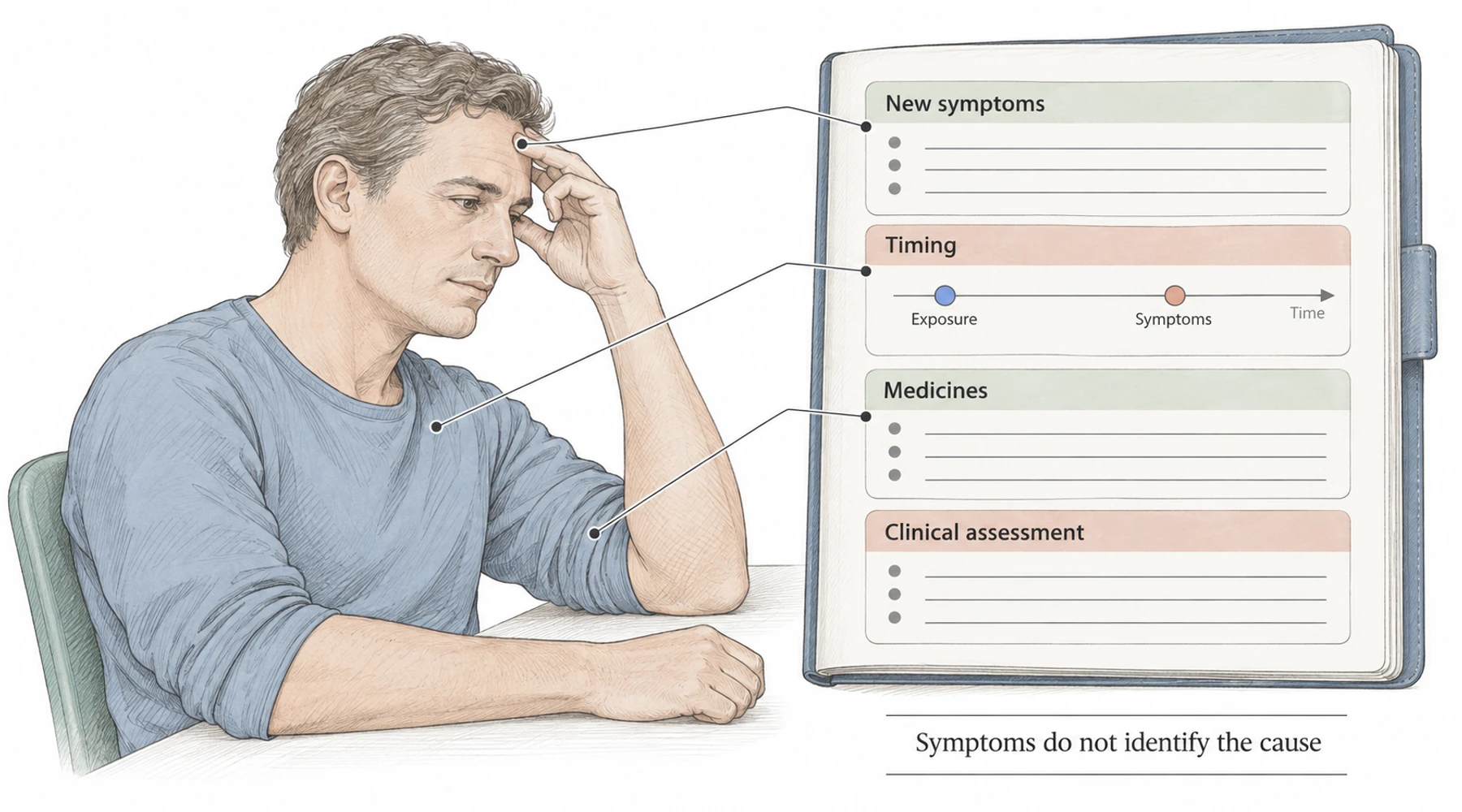
Feeling worse after taking methylene blue does not demonstrate that pathogens are dying or that toxins are leaving your body. A headache, nausea, fatigue, or shakiness is an observation. Calling it “die-off” adds a cause that the symptom itself cannot establish.
If you have new symptoms, avoid taking another self-directed dose while seeking medical advice. Severe or rapidly worsening symptoms need urgent care. If methylene blue was administered in a clinical setting, tell the treating team immediately. Do not try to push through a reaction to make a wellness regimen “work.”
What “die-off” claims assume
The explanation usually contains three separate claims: an infection is present, methylene blue is effectively treating it, and the treatment is producing an inflammatory reaction. Feeling ill after exposure does not establish any of those steps.
The distinction is practical. “Nausea began two hours after I took this product” gives a clinician information they can evaluate. “I am detoxing” replaces that information with a conclusion. It can also make a person overlook another medicine, a concentration error, or an illness that happened to begin at the same time.
I did not locate controlled clinical evidence establishing a predictable methylene blue “die-off syndrome” in people taking it for wellness. That is not a claim that every unexplained reaction has been studied. It means there is no supported symptom checklist or expected duration to use as reassurance in that setting. The separate question of whether methylene blue removes heavy metals or acts as a detox requires evidence about removal, not how someone feels afterward.
What a Jarisch–Herxheimer reaction actually describes
The term has a specific clinical context. The CDC’s syphilis treatment guidance describes a Jarisch–Herxheimer reaction as an acute fever-related reaction that can develop during the first 24 hours after starting syphilis treatment, often with headache and muscle aches. It is distinguished from penicillin allergy. This does not mean any fever after any antimicrobial substance is the same reaction.
Useful contemporary data come from a 2025 secondary analysis of a randomized syphilis trial. Researchers assessed 249 adults with early syphilis after their first intramuscular benzathine penicillin G treatment. Fifty-nine, or 23.7%, reported symptoms consistent with the reaction. Median onset was 4.9 hours and median symptom duration was 12.8 hours. Symptoms were collected through a standardized checklist, rather than confirmed by a single diagnostic laboratory test.
Those numbers describe a defined infection, treatment, and study population. They are not a waiting period for a person feeling ill after oral methylene blue. Even in an appropriate infection-treatment context, a clinician must consider competing explanations. The name alone does not establish that it is safe to stay home.
Distinction table: observation, explanation, next step
This table separates what can be reported from what still needs assessment. It is a conversation aid, not a diagnostic scoring system.
| What you observe | What it does not establish | What deserves assessment |
|---|---|---|
| Headache, nausea, or diarrhea after exposure | That microbes were killed or toxins released | Product, amount, timing, associated symptoms, and other possible causes |
| Sweating, agitation, fever, or tremor, especially in combination | A desirable adjustment phase | Possible serotonin toxicity or another acute illness; seek urgent assessment |
| New weakness, breathlessness, yellow eyes, or dark urine | That the body is clearing toxins | Possible anemia or other disease; obtain prompt medical assessment, urgently if severe |
| Rash with facial or throat swelling, wheezing, or collapse | A harmless “Herx” | Possible severe allergic reaction; call emergency services |
| Fever and aches after clinician-directed treatment for diagnosed syphilis | Proof that every later symptom has the same cause | The treating team can assess a possible Jarisch–Herxheimer reaction alongside allergy and other causes |
The first row includes symptoms listed among adverse reactions in the PROVAYBLUE prescribing information. That label concerns intravenous prescription treatment for acquired methemoglobinemia. Its event rates should not be transferred to consumer oral products, but its documented hazards should not be renamed “detox.” It also warns about serious serotonin syndrome, severe allergic reactions, and hemolytic anemia, including particular risk in G6PD deficiency. Anemia can be delayed by a day or more after treatment.
Why the symptom pattern matters
A single upset stomach does not diagnose serotonin syndrome. A combination of altered mental state, increased temperature, sweating, and abnormal muscle activity is more concerning. MedlinePlus describes serotonin syndrome as potentially life-threatening and explains that assessment includes medicine history and exclusion of other causes. Do not wait for every possible sign to appear before seeking help.
The combination risk makes methylene blue drug interactions relevant even when a person calls their exposure a supplement. Bring the full medication list, including antidepressants, pain medicines, cough products, and other supplements. Do not independently stop prescribed medicines or invent a washout schedule to continue methylene blue.
Hemolysis means breakdown of red blood cells. NHLBI explains that hemolytic anemia develops when destruction exceeds replacement, and diagnosis requires assessment and blood tests. Anemia symptoms can include breathlessness, weakness, jaundice, and dark urine. These are not measurements of toxin clearance. Methylene blue can itself color urine, so color alone cannot settle the explanation either.
Call emergency services for difficulty breathing, collapse, seizures, severe confusion, or a rapidly worsening reaction. Do not drive yourself if you are dizzy, confused, or otherwise impaired.
Record the exposure without assigning a diagnosis
For symptoms that are not an emergency, contact a clinician or pharmacist promptly and use the symptom and exposure record to capture four details:
- Product name, formulation, concentration, and a photograph of the label.
- Amount and route used, exposure times, and any recent change.
- Symptoms in ordinary language, onset time, severity, and whether they are improving or worsening.
- Other medicines and supplements, relevant conditions, and any known G6PD result.
Do not take another dose to test whether the symptoms return. Do not add a “binder,” sauna session, fasting plan, or supplement stack to manage an assumed detox reaction. Additional interventions make the exposure history harder to interpret and do not establish the original cause. The broader methylene blue safety guide explains recognized adverse effects and how to report a suspected reaction.