
Article
Uribel, Uro-MP, and Urogesic Blue: why these are combination medicines
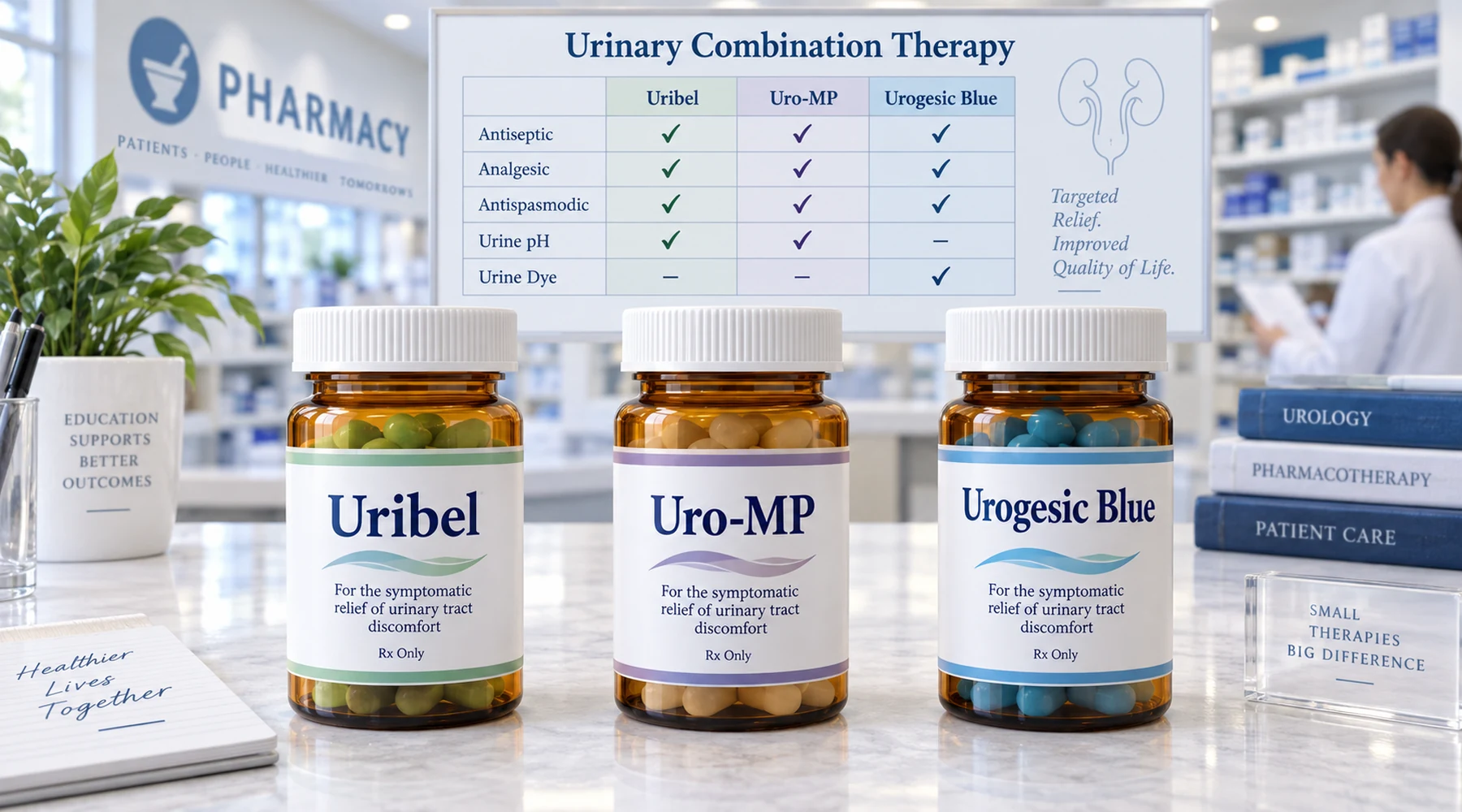
A patient starts a blue capsule for urinary burning and urgency. The urine turns blue. When the refill bottle says a different brand name, the patient asks a reasonable question: was the blue dye the active part, and does any product with methylene blue work the same?
That mental model is wrong, and the label explains why. Uribel medication, Uro-MP, and Urogesic Blue are combination medicines. Methylene blue is one component among several, and it is labeled as a weak antiseptic, not as the whole treatment. To compare these products, read each ingredient and its stated purpose instead of tracking the color.
All three products discussed here appear in DailyMed as unapproved drug products with manufacturer supplied labeling. That status matters. It means the labels describe the marketed formulation, but the products did not go through the same FDA new drug approval review as an approved prescription drug. Check the actual dispensed label, not the brand family name, before assuming equivalence.
Ingredient by product comparison
The table uses current US labeling. Strengths are per capsule for Uribel and Uro-MP, and per coated tablet for Urogesic Blue.
| Labeled ingredient and purpose | Uribel capsule | Uro-MP capsule | Urogesic Blue coated tablet |
|---|---|---|---|
| Methenamine, urinary antibacterial through formaldehyde in acidic urine | 118 mg | 118 mg | 81.6 mg |
| Sodium phosphate monobasic, acidifier that keeps urine acidic so methenamine can act | 40.8 mg | 40.8 mg | 40.8 mg |
| Phenyl salicylate, mild analgesic for pain | 36 mg | 36 mg | Not present |
| Methylene blue, weak antiseptic | 10 mg | 10 mg | 10.8 mg |
| Hyoscyamine sulfate, parasympatholytic with antispasmodic effect | 0.12 mg | 0.12 mg | 0.12 mg |
The current Uribel label lists this five ingredient set and describes each role above. The current Uro-MP label matches Uribel ingredient for ingredient at the same strengths, with only the phosphate salt form described differently. The current Urogesic Blue label is a four ingredient tablet at different methenamine and methylene blue strengths, and it omits phenyl salicylate.
One label reading detail is worth noting. The Uribel Description section states methenamine 118 mg, while the structured ingredients table on the same DailyMed page shows 120 mg. Use the Description and package value of 118 mg for the per capsule formulation, and treat the discrepancy as a reason to confirm the dispensed package rather than as a separate strength.
What each ingredient is labeled to do
Methenamine does the central antibacterial work described in these labels. In acidic urine it converts to formaldehyde, which the label describes as bactericidal or bacteriostatic. That mechanism explains why the acidifier matters. Sodium phosphate monobasic helps maintain acidic urine so methenamine can degrade as intended. Medicines that raise urine pH, including some antacids, thiazides, and urinary alkalizers, can therefore reduce the methenamine effect described on the label.
Phenyl salicylate plays a narrower role. The label says it releases salicylate, described as a mild analgesic for pain. It is present in Uribel and Uro-MP and absent from current Urogesic Blue. A patient who switches from a five ingredient capsule to the four ingredient tablet and notices less pain relief has a concrete label difference to discuss with the prescriber, not a mystery.
Methylene blue plays a supporting role in these labels. Both Uribel style labels and the Urogesic Blue label call it a weak antiseptic. That wording is deliberate. It does not describe methylene blue as a standalone urinary treatment, and none of these three labels states that methylene blue alone is interchangeable with the combination. The blue color marks its presence. It does not measure the effect of the other ingredients.
Hyoscyamine sulfate supplies the antispasmodic action. The label describes it as a parasympatholytic, which reduces bladder spasm type symptoms. The same pharmacology explains the labeled warnings: dry mouth, blurred vision, dizziness or drowsiness, rapid pulse, and difficulty urinating up to acute urinary retention. The labels direct patients to stop and seek care for rapid pulse, dizziness, or blurred vision, and they call out glaucoma, gastrointestinal obstruction, myasthenia gravis, and obstructive uropathy as conditions of particular concern.
Why methylene blue alone is not a substitute
Remove four ingredients from a five ingredient product and the remaining dye cannot preserve the labeled combination. Methenamine supplies the formaldehyde mediated antibacterial action. Phosphate maintains the acidic conditions that action depends on. Hyoscyamine supplies the antispasmodic effect. In Uribel and Uro-MP, phenyl salicylate supplies the labeled analgesic component. A single ingredient consumer solution has none of those labeled companion effects at these strengths, and no combination label endorses the swap.
The safety assessment also changes when the full medicine is considered. The intravenous methylene blue prescribing information carries a boxed warning for serious and potentially fatal serotonin syndrome with serotonergic medicines and opioids. The three urinary combination labels do not carry that boxed warning, and their interaction sections focus on antimuscarinic effects, urine pH effects, sulfonamide crystalluria risk with formaldehyde, salicylate intolerance, and related issues. That absence does not clear a combination containing methylene blue for use with antidepressants. Because the serotonergic risk of non intravenous methylene blue at low doses remains incompletely characterized, anyone taking an SSRI, SNRI, MAOI, linezolid, dextromethorphan, bupropion, a stimulant, or an opioid should have the prescriber and pharmacist review the complete list first. Our methylene blue interaction guide explains that route specific reasoning in more detail.
One page for brand variants, not one name for every bottle
Uribel generic searches cause much of the confusion. A generic that lists the same five ingredients at 118 mg, 40.8 mg, 36 mg, 10 mg, and 0.12 mg belongs in the same comparison row as branded Uribel. The manufacturer name and the capsule color do not define the medicine. The ingredient list does.
Uro-MP sits in the same row for the same reason. Its current label matches the Uribel five ingredient set at the same strengths, so keeping it on the same page prevents a false distinction between two nearly identical formulations. Urogesic Blue needs the same page but a different row, because the current tablet is a reformulated four ingredient product at 81.6 mg methenamine and 10.8 mg methylene blue with no phenyl salicylate. Treating all three names as synonyms misses that difference. Related urinary symptom research keeps this comparison anchored to the clinical question, while our label reading method shows how to check any dispensed bottle against the table above.
Older bottles add another trap. Formulations with these brand roots have changed over time, and a tablet from years ago may not match the current label. Do not carry an old ingredient list forward. Read the bottle in hand.
When symptoms change, suspect the right ingredient
A change after starting or switching one of these products is an attribution problem. Each ingredient has a characteristic signature, and the label helps assign the question to the right one.
Less burning but continued urgency and cramping points toward the analgesic and antispasmodic split. Phenyl salicylate addresses mild pain, while hyoscyamine addresses spasm. When a switch to Urogesic Blue removes phenyl salicylate, persistent burning deserves a direct conversation about the missing analgesic component rather than a higher dose of the new tablet.
New dry mouth, blurred near vision, constipation, a fast heartbeat, or trouble starting urination points toward hyoscyamine. These are labeled antimuscarinic effects, and urinary retention can require urgent care. Do not counter them with another bladder relaxant without prescriber input, because other antimuscarinic medicines can amplify the effect.
Rash, ringing in the ears, or intolerance in someone sensitive to aspirin points toward the salicylate component in Uribel and Uro-MP. The labels mention possible cross intolerance in patients intolerant of salicylates. A salicylate free option is a prescriber decision, not a self substitution, because the replacement still contains methenamine, methylene blue, and hyoscyamine with their own constraints.
Cloudy urine chemistry questions belong to the methenamine and phosphate pair. Alkaline urine undermines the labeled methenamine mechanism, and the labels warn that sulfonamide drugs can precipitate with formaldehyde in urine and increase crystalluria risk. That warning describes an interaction with a separate sulfonamide medicine. It does not state that these urinary products contain a sulfa antibiotic. Bring the full medicine list, including antacids and thiazides, to the review. Questions about infection course and retreatment timing belong with our urinary infection care pathway.
Do not assume a foreign product with a similar name is the same
Urinary antiseptic and analgesic combinations vary by country. A product sold abroad under a similar blue themed or methenamine based name can contain different ingredients, different salt forms, or different strengths from the US labels compared here. The only reliable comparison is the country specific package insert or summary of product characteristics for the exact package dispensed. Match all five positions in the table: methenamine, phosphate form, phenyl salicylate presence or absence, methylene blue strength, and hyoscyamine strength. Anything less is a category match, not an ingredient match. Cross border naming patterns are covered in our international urinary product comparison.
Bring three items to the pharmacy counter: the dispensed bottle, the complete medicine and supplement list including serotonergic agents and antacids, and the symptom that changed. Those three items let the pharmacist map the problem to the ingredient responsible instead of relitigating the brand name.