
Article
Does methylene blue treat a UTI? Symptoms, infection, and combination medicines
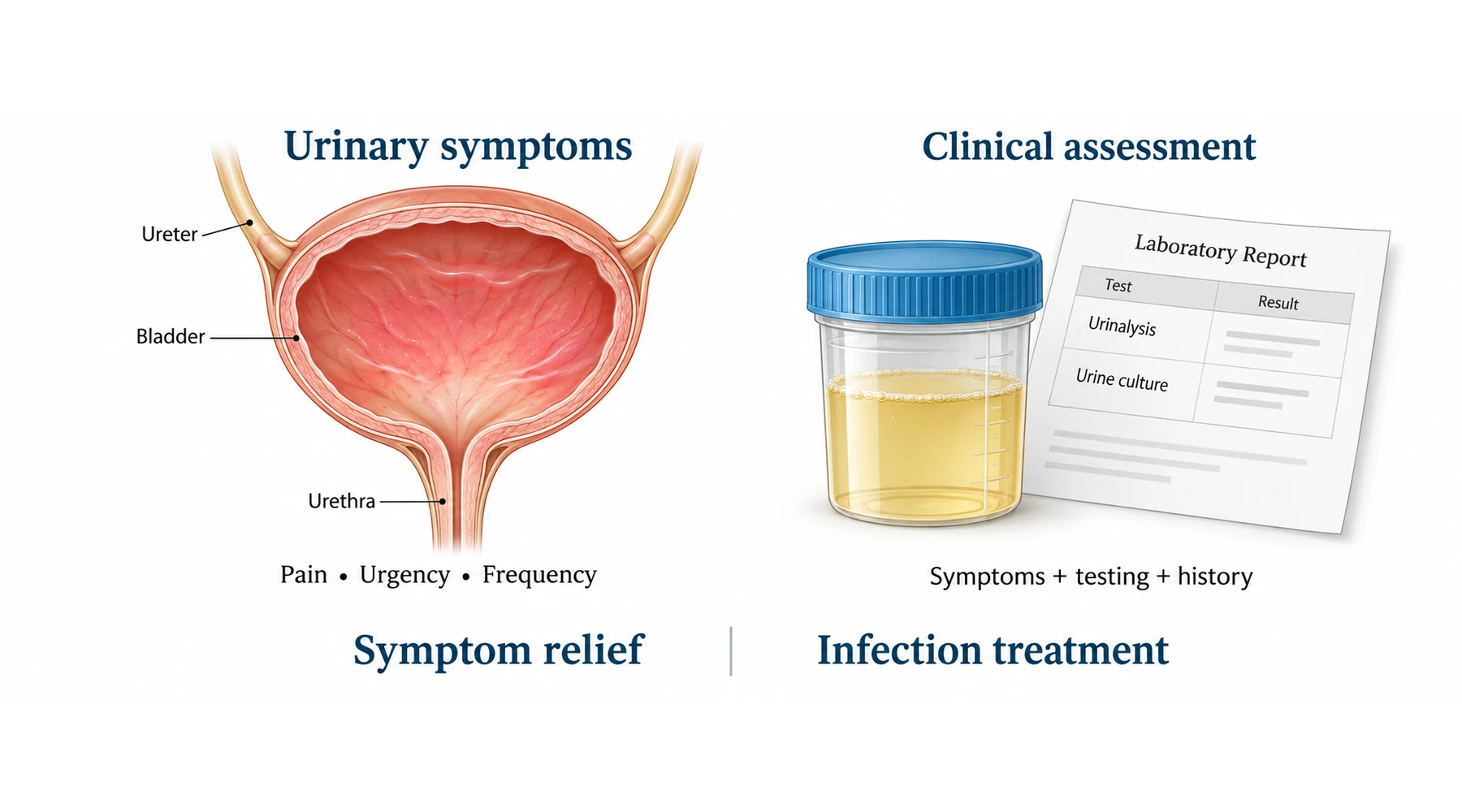
Methylene blue alone is not an established treatment for a bacterial urinary tract infection. Its presence in a urinary combination medicine does not show that a bottle of standalone methylene blue will cure cystitis, prevent recurrence, or treat a prostate infection. The clinical study discussed below tested combinations and subsequently added antibiotics.
The first useful distinction is between feeling better and treating the cause. Both matter. A medicine can reduce bladder spasms while bacteria remain; symptoms can also persist when bacterial infection is no longer the explanation. NIDDK's bladder-infection treatment guidance separates antibiotics for bacterial infection from medicines for pain and further evaluation when infection cannot be confirmed.
What urinary symptoms can establish
Burning, urgency, frequent urination, and lower abdominal discomfort can occur with a UTI. They describe an experience, however, rather than identifying its cause. Cystitis means bladder inflammation; bacterial cystitis is one cause, while interstitial cystitis/bladder pain syndrome is a different diagnostic problem.
A bladder-infection assessment combines history, examination, and appropriate tests. Urinalysis can detect findings such as white blood cells and blood. A urine culture looks for bacterial growth and can inform antibiotic selection. These tests answer different questions, so “my urine test was negative” needs clarification: which test, when, and in relation to which treatment?
Persistent symptoms with negative tests deserve attention. A negative culture is not a reason to dismiss pain, but neither does pain prove a hidden infection. The Urological Society of Australia and New Zealand's position statement acknowledges diagnostic limitations and recommends individualized assessment. The result must be interpreted alongside symptoms and other findings, rather than becoming a reason to start repeated unmonitored antimicrobial courses.
Symptom relief versus infection treatment
Use this comparison when evaluating a product claim or discussing a treatment response. It distinguishes the observation from the conclusion it can support.
| Observation or treatment target | What it can tell you | What it cannot establish by itself |
|---|---|---|
| Less burning, urgency, or bladder spasm | Symptoms have improved, which is a meaningful outcome | That bacteria were present initially or have been eliminated |
| Antibacterial activity under laboratory conditions | A substance affects bacteria under the tested conditions | That an oral product safely reaches an effective concentration in a patient's urinary tract |
| A negative urine culture | No reportable bacterial growth was detected under that test's conditions | Why symptoms persist, or whether a particular product caused the result |
| Clinician-directed treatment for bacterial UTI | Treatment addresses an assessed infection, with follow-up based on the clinical situation | That every future episode has the same cause or needs the same medicine |
| Blue or green urine after methylene blue | The dye can change urine color | Bacterial killing, treatment success, or a measure of infection severity |
For example, someone starts a combination tablet and reports less cramping that evening. That is useful symptom information. To claim that methylene blue cured an infection, additional questions remain: was there an infection, what else was in the tablet, were antibiotics also used, and what happened on follow-up?
Why combination medicines are different
The Uribel capsule label on DailyMed describes relief of irritative urinary symptoms. Its ingredients have different stated roles:
| Ingredient | Role described in this capsule label |
|---|---|
| Hyoscyamine | Relaxes smooth muscle to reduce spasm |
| Phenyl salicylate | Releases salicylate for pain relief |
| Methenamine | Releases formaldehyde in acidic urine, producing antibacterial activity |
| Sodium phosphate monobasic | Helps maintain the acidic urine needed for methenamine's action |
| Methylene blue | Has weak antiseptic properties; can discolor urine |
This label explicitly states that FDA has not approved the labeling or found this product safe and effective. A DailyMed listing is not an approval certificate. Formulations vary, so check the actual package rather than transferring this table to every similarly named product. Our guide to urinary combination medicines containing methylene blue explains the product distinctions.
Methenamine and methylene blue are different substances. NICE's recurrent-UTI recommendations include methenamine hippurate as a preventive option for selected patients after any current UTI has been adequately treated. That recommendation does not establish methylene blue as prevention, or make a symptom-relief combination interchangeable with methenamine hippurate.
What the combination trial actually measured
A 2020 randomized, double-blind trial by Gama and colleagues enrolled 288 adults with recurrent cystitis, almost all women. It compared oral methenamine plus methylene blue with a combination containing those ingredients plus acriflavine and belladonna. There was no methylene-blue-only group and no placebo group.
The primary outcome was improvement in the questionnaire domain covering urinary regularity after three days. Improvement occurred in 69.4% and 72.2% of the groups, respectively, without a significant between-group difference. Culture-directed antibiotics were then added for the final three days of the six-day study.
The study therefore informs short-term symptoms during a supervised combination-treatment strategy. It cannot isolate methylene blue's contribution, demonstrate standalone bacterial eradication, or establish long-term prevention. Its protocol is not a home-treatment schedule, and its findings do not establish efficacy for chronic bacterial prostatitis.
Persistent bladder pain, prostatitis, and stones
When symptoms recur, the evaluation needs to distinguish repeated infections from a continuing symptom disorder. Interstitial cystitis is diagnosed by assessing symptoms and excluding other explanations, using history, examination, and tests as appropriate. It is not diagnosed solely because one culture was negative.
The same distinction matters for men with pelvic pain, painful urination, or “prostatitis” that never seems to clear. NIDDK distinguishes bacterial prostatitis from chronic prostatitis, in which an infection is often not found. Chronic pelvic pain syndrome can require a different approach from treating a demonstrated prostate infection. Neither urinary symptoms nor a temporary response to a remedy identifies the responsible organism.
Stone claims require separate evidence. A stone no longer visible on a later scan does not demonstrate that methylene blue dissolved it, and a change in pain does not measure stone composition or size. Stone assessment and treatment depend on the stone's characteristics. The combination trial above excluded people with a history of renal stones. It supplies no evidence for stone dissolution.
Bring this information to the appointment
Use this checklist to make recurrent symptoms easier to assess. Record observations without deciding in advance that every episode is bacterial.
- A symptom timeline: first day, pain location, urinary frequency, fever, visible blood, and whether pain changes as the bladder fills or empties. Note symptom-free intervals and, when relevant, pelvic or ejaculation-related pain.
- The actual test reports: urinalysis, culture, susceptibility results, and imaging. Include dates and whether samples were taken before or after antibiotics or urinary medicines.
- A treatment timeline: names of antibiotics and symptom medicines, dates used, changes noticed, and adverse effects. Bring photographs of combination-product labels and any standalone methylene blue label.
- Relevant health and medicine information: pregnancy possibility, kidney problems, previous stones, difficulty emptying the bladder, allergies, and all prescription drugs and supplements. An oral urinary-analgesic case report described serotonin toxicity with a methylene-blue-containing product, making antidepressant and other serotonergic medicine disclosure particularly relevant.
- A follow-up question: “What supports infection in this episode, what is intended to relieve symptoms, and what should happen if symptoms continue?” Use the broader methylene blue clinician-question guide for medication-specific discussion.
Contact a health professional for suspected bladder infection. Seek urgent care for possible kidney-infection symptoms, including fever or chills, back or side pain, or vomiting. Inability to urinate also needs urgent assessment. Do not wait for a dye or symptom-relief medicine to work in these situations.