
Article
Methylene blue for dogs: clinical uses and toxicity questions
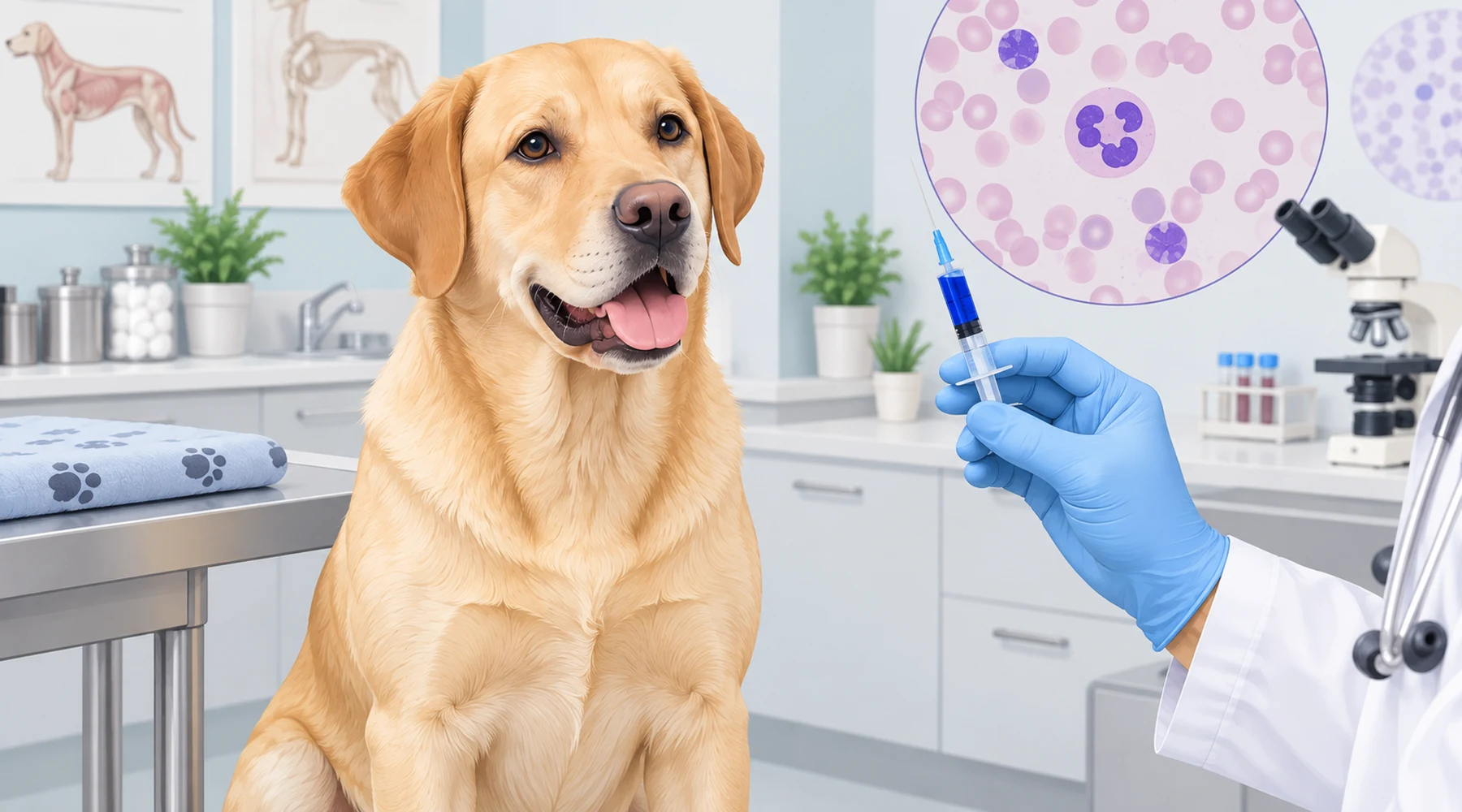
A dog laps blue water from a freshly treated aquarium. An owner reads that methylene blue reverses a blood disorder and wonders whether a drop from the fish bottle could help a sick dog at home. Both situations involve the same dye. Neither is a home treatment decision.
The confusion comes from mixing up two concepts that share a name. One is a clinic procedure: a veterinarian gives a measured intravenous dose for a specific blood emergency and then monitors the blood for days. The other is an exposure: a dog swallowed some unknown amount of dye from a tank, a dip, or a tablet. The first belongs in a hospital. The second belongs on the phone with a veterinarian. This article keeps them separate, explains why there is no safe home dosage chart for dogs, and gives a table to take to the clinic.
What veterinarians actually use it for
The established canine use is narrow: clinically significant methemoglobinemia caused by an oxidant. Normal hemoglobin carries oxygen because its iron sits in the reduced ferrous state. Oxidant chemicals convert that iron to the ferric state, forming methemoglobin, which cannot carry oxygen. The dog can look blue or gray around the gums while the blood itself turns chocolate brown.
Inside the red cell, methylene blue can be reduced to leucomethylene blue, which hands electrons back to the oxidised iron and restores working hemoglobin. That is the therapeutic reaction. It explains why the drug helps only when excess methemoglobin is the problem. It does nothing for ordinary anemia, low oxygen from lung disease, or poisoning where methemoglobin is not involved.
Typical triggers in dogs include acetaminophen, nitrate or nitrite, benzocaine and related oxidant drugs, and occasionally onion or garlic associated oxidative injury. For acetaminophen, the core therapy is decontamination plus N-acetylcysteine, and methylene blue is an adjunct when methemoglobin is important, as described in the Merck guidance on analgesic toxicoses. For onion and garlic, standard care is decontamination, oxygen and transfusion support, and fluids, because the main injury is delayed Heinz body hemolysis over days rather than methemoglobin alone. Copying a ruminant nitrate protocol into a dog would be dangerous, because cattle tolerate doses that injure dogs, a point the veterinary nitrate literature makes explicit.
Two other uses need a clear label. Local injection around a tumor to map the sentinel lymph node is a procedural dye application in canine oncology, not a systemic treatment. Experimental use in distributive or vasoplegic shock, where the dye is given to blunt nitric oxide signaling, remains investigational in dogs. A 2026 canine bypass study states plainly that there is no clinical veterinary evidence for that shock indication, and high doses in experimental models worsened blood pressure and heart function. So the honest summary is one established role, one procedural dye role, and the rest experimental. Aquarium directions, human protocols, and laboratory staining uses do not transfer.
Why there is no home dosage chart
Search results promise a methylene blue for dogs dosage chart. For this drug, a chart would be the wrong tool, because the safe window is narrow, the monitoring is the treatment, and the number alone does not make the decision safe.
Published veterinary references cluster around 1 to 1.5 mg per kg given intravenously, slowly, as a one percent solution, once, for methemoglobinemia. The Merck analgesic toxicosis entry lists that range with administration over several minutes. The veterinary monograph literature specifies a single slow dose with blood monitoring for three to four days, and reports anemia severe enough to need transfusion around 5 mg per kg. A 1970s style surgical staining dose near 3 mg per kg produced delayed anemia and, in one case, fatal renal injury after hemolysis. The margin between help and harm is small.
That number also answers fewer questions than it seems. It says nothing about whether methemoglobin is actually present, whether the cause responds to this drug, what other medications the dog takes, or whether the kidneys and red cells can tolerate an oxidant. A chart cannot measure methemoglobin by co-oximetry, cannot check a blood smear for Heinz bodies, and cannot watch the hematocrit fall three days later. The clinic can. This is why the table below lists ranges as clinic context for discussion with a veterinarian, not as instructions. Do not give methylene blue at home, do not convert an aquarium treatment into a dog dose, and do not reuse a human label such as the PROVAYBLUE prescribing information as a dosing guide.
The paradox: antidote and oxidant at once
Think of methylene blue as two concepts in one bottle. At a low, slow, supervised exposure with functioning reductase systems, it behaves as a reducing helper and lowers methemoglobin. At higher exposure, or when red cell defenses are overwhelmed, it behaves as an oxidant and creates the injury it was meant to fix: more methemoglobin, Heinz bodies, membrane damage, and hemolysis.
That paradox is dose dependent and delayed. Anemia can appear three to four days after the dose, which is why references insist on follow up blood work even when the dog looks better within half an hour. Severe hemolysis can spill hemoglobin into plasma and urine and injure the kidneys. High intravenous doses in a dog study raised methemoglobin within a minute rather than lowering it.
Two interactions deserve special attention. Methylene blue is a potent reversible inhibitor of monoamine oxidase. The human label carries a boxed warning about serotonin syndrome when combined with serotonergic drugs. In a dog, the relevant history includes trazodone, fluoxetine and other serotonin reuptake inhibitors, clomipramine, selegiline, and drugs such as tramadol. Signs include agitation or altered mentation, high temperature, rapid heart rate or unstable blood pressure, tremor, rigidity, incoordination, and seizures. The strong warning comes mainly from human evidence, so canine incidence is not well quantified, but the medication history belongs in every triage call.
Species matters too. Dogs can develop Heinz body anemia from this drug, but cats are substantially more vulnerable because feline hemoglobin carries more oxidisable groups and feline red cells clear damage poorly. A dog protocol must never be scaled to a cat by weight. Federal regulation 21 CFR section 500.27 records fatal Heinz body anemia in cats given oral methylene blue urinary products according to label directions. That history is a reminder that the oral route is not automatically gentle.
Clinical use and exposure table
Bring this table to the veterinarian rather than acting on it. It separates supervised clinic use from accidental exposure, which is the distinction that keeps decisions safe. Review it with the clinic; it does not replace diagnosis.
| Situation | What it is | What the veterinarian weighs |
|---|---|---|
| Severe methemoglobinemia from an oxidant | Established clinic indication. Measured methemoglobin, symptomatic dog, known oxidant trigger. | Single slow intravenous dose around 1 to 1.5 mg per kg of one percent solution, once, with co-oximetry and hematocrit and smear monitoring for 3 to 4 days. Cause specific care continues alongside, for example N-acetylcysteine for acetaminophen. |
| Hereditary reductase deficiency | Rare specialist indication. Recurrent methemoglobinemia without toxin. | Case based intravenous treatment near 1 mg per kg, sometimes a monitored oral course later. Long term plan only under specialist care. |
| Sentinel lymph node mapping | Procedural dye use in tumor surgery. | Local peritumoral injection by the surgeon, not systemic dosing. Blood effects are a different question from dye migration. |
| Shock or low vascular tone | Experimental in dogs. No accepted routine protocol. | Enrollment logic, not home logic. Blood pressure, cardiac and pulmonary effects can worsen at higher doses. |
| Drank treated aquarium water | Exposure, not treatment. Dilute but unknown volume. | Product label, stock concentration, tank volume, estimated volume drunk, body weight, time, signs, all medications. Small dilute sip and concentrate are different cases. |
| Licked fish dip or chewed concentrate or tablet | Higher concern exposure. | Same product details plus milligrams per unit and maximum units missing. Other tablet ingredients change the assessment. |
| Dog on trazodone, SSRI, clomipramine, selegiline, tramadol | Interaction risk layered on any of the above. | Full drug and supplement list before any decision. Serotonin syndrome signs need emergency assessment. |
If a dog is exposed: what to do now
First, stop further drinking and save the evidence: the product bottle or a photograph of the label, the concentration, how much went into what volume of water if it was a tank, the estimated amount swallowed, the time, the dog's weight, current signs, known disease, and every medication and supplement. Poison triage runs on exactly that list. General guidance from the ASPCA on pet poisoning asks owners to keep the container and call rather than wait for signs, and the ASPCA poison control service and services such as Pet Poison Helpline exist for this call alongside the regular clinic or emergency hospital.
Do not give methylene blue as a home antidote. Do not induce vomiting unless the veterinarian or toxicologist specifically directs it, because emesis is wrong or dangerous in some exposures and with some signs. Do not give hydrogen peroxide on your own initiative. Keep dye off the coat from being groomed off where possible, rinse skin contamination as the clinic advises, and keep product away from eyes.
Seek emergency assessment promptly for difficult breathing, blue or gray gums, marked weakness or collapse, unconsciousness, seizures, severe agitation or tremor with high temperature, or pale or yellow gums with dark or red brown urine. Note the delay: a dog that looks well on the evening of exposure can still develop hemolytic anemia days later, so triage covers both the night and the follow up blood work. A review of acute methemoglobinemia management in the Journal of Veterinary Internal Medicine recommends hematocrit checks for several days after treatment decisions for exactly this reason.
One last boundary keeps every other page on this site in its place. Fish treatment guides, water clearance steps after aquarium dosing, dye chemistry, and stain protocols describe tanks, glassware, and microscopes. None of them is a dog prescription. The dog question always ends the same way: call the veterinarian, bring the label and the numbers, and let the blood work decide.