
Article
Methylene blue for axolotls: evidence and veterinary precautions
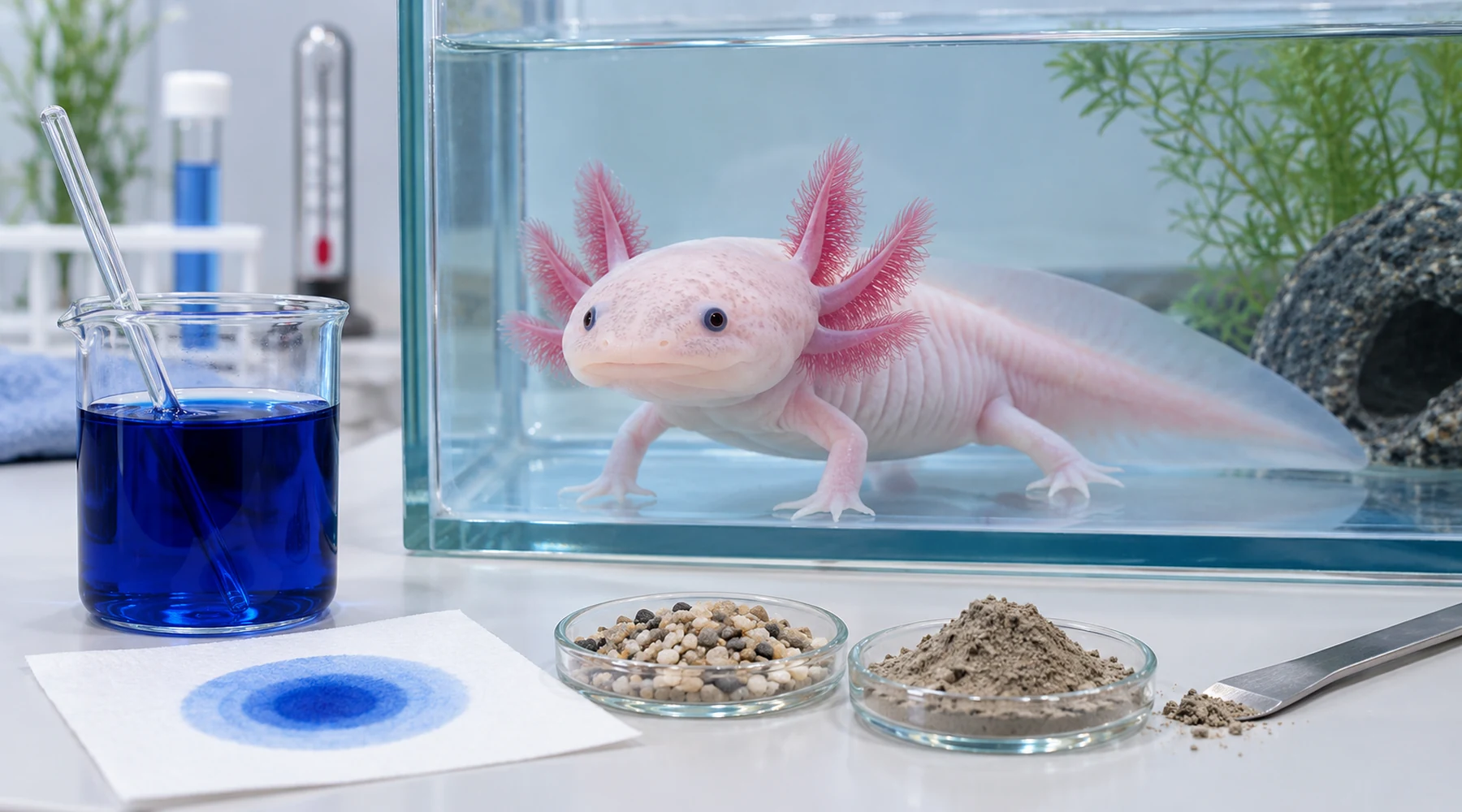
A keeper sees white cotton on an axolotl gill, searches for methylene blue for axolotl fungus, and finds a fish medication bottle already on the shelf. The water in both tanks looks the same, the cotton looks the same, and the bottle says fungus. The transfer feels obvious.
It is the central error this article exists to prevent. An axolotl is not a fish with legs. It is a neotenic salamander with permeable skin, feathery external gills, cold water requirements, and a narrow tolerance for the shortcuts that fish keepers routinely use. A fish fungus direction cannot be relabeled by analogy, and the amphibian evidence for methylene blue does not support doing so.
The concept mismatch: fish treatment versus amphibian patient
Software designer Daniel Jackson uses a simple test for concepts. A concept is a unit of function with its own state and its own rules. Two situations that look alike on screen can run on different concepts underneath, and actions that are safe in one will fail in the other.
Fish treatment and amphibian treatment look alike. Both involve a sick animal in water, a dye added to water, and a hoped for antifungal effect. Underneath, the patients differ in three ways that change every decision.
First, uptake differs. Amphibian skin is permeable enough that veterinarians routinely give drugs by bath, and standard guidance tells clinicians to account for absorption through diseased skin and for differences between species, as described in the Merck guidance on clinical techniques in amphibians. Fish take up many waterborne drugs mainly across the gills, with skin contributing only a small share in large fish, according to a 2023 review of pharmaceutical uptake in fish. A concentration tolerated by a fish therefore says little about what an axolotl absorbs. One embellishment should be dropped. Axolotl gills contain active transport cells, shown by ultrastructural work on axolotl gills, but no study shows greater methylene blue uptake through axolotl gills than through fish gills, and older flux work in related salamanders found the skin doing substantial exchange with gills tied off, as reported by Baldwin and Bentley.
Second, the environment differs. Axolotl husbandry depends on cool water and a working biological filter. The colony standard described in the Ambystoma Genetic Stock Center husbandry guide keeps adults near 15 to 18 degrees and warns against holding them above about 22 degrees, with dechlorinated water and biofiltration converting ammonia and nitrite. Anything that harms nitrifying bacteria harms the patient indirectly, because waste keeps accumulating during treatment.
Third, the diagnosis differs. White cotton on an axolotl is often described as fungus, but the veterinary term is usually saprolegniasis, a water mold infection of damaged skin or gills that produces whitish cottony material and favors animals whose slime layer was injured by ammonia or handling. The MSD Veterinary Manual account of amphibian infectious disease recommends confirming it by skin scraping that shows hyphae or zoospores, because visual guessing confuses water mold with bacterial lesions, shedding skin, or debris.
What amphibian evidence actually exists
The honest summary is short. There is historical use, formulary mention, and one directly relevant salamander experiment that failed. There is no controlled trial showing methylene blue cures established Saprolegnia infection in hatched axolotls.
Historical practice is real but weak as evidence. An old Indiana University Axolotl Colony newsletter archived by the University of Kentucky describes methylene blue applied to fungal growth on gills and toes, in the archived colony newsletter. That records that a colony tried it decades ago. It does not establish a safe concentration or a cure rate. Formulary mention is similarly thin. A widely cited compendium by Smith in the ILAR Journal lists methylene blue among amphibian antifungals based on older references. A formulary table records what was reported, not a trial result, and printed dip concentrations there should not be read as validated home protocols.
The direct salamander experiment points the other way. In work on egg sacs of the salamander Hynobius dunni with Saprolegnia-like infection, published in The Herpetological Bulletin, methylene blue baths were described as unsuccessful while mechanical removal of infected and nonviable eggs performed better. Egg sacs are not juvenile or adult axolotls, and the replicate count was small, but this is the closest experimental analogue and it did not favor the dye.
The synthesis literature agrees on the gap. A 2022 review of saprolegniosis lists methylene blue among treatments reported for amphibians yet warns that most amphibian protocols were borrowed from fish medicine without adequate amphibian-specific testing of efficacy or safety. That warning is the correct frame for every fish bottle discussed below.
Safety data are equally incomplete. No well powered axolotl study defines a therapeutic window for methylene blue. An axolotl veterinary paper on ectoparasite treatment notes toxicological concerns around methylene blue in this species context. Sublethal effects are plausible even when the animal survives, as shown when methylene blue marking altered tadpole behavior and capture risk. Survival is not proof of inertness.
What veterinary guidance recommends instead
Veterinary sources converge on a sequence, and methylene blue for the hatched animal is not its center. The order matters more than any single product.
Start with water. Test ammonia, nitrite, nitrate, pH, and temperature, remove chlorine or chloramine, and confirm the filter is functioning. The veterinarian-reviewed Lafeber axolotl care sheet specifies ammonia and nitrite at zero with nitrate below 10 ppm, and places filtration, water changes, and cool temperatures inside routine disease prevention. This step is treatment, not background, because ammonia damage to the slime layer predisposes to water mold.
Get a diagnosis for anything beyond a trivial spot. A vet can scrape the lesion, confirm water mold, debride localized tissue where appropriate, and separate it from bacterial infection that needs different care. The fish egg literature is a separate topic covered in the guide to methylene blue for fish eggs, and general fish tank logic is covered in the aquarium fish treatment decisions guide. Neither transfers to an amphibian case.
Use axolotl-appropriate therapy under veterinary direction. MSD lists salt treatment, debridement of localized lesions, and amphibian antifungal drugs as options depending on the case, with methylene blue mentioned for eggs rather than as the principal recommendation for established skin or gill disease. Generic amphibian salt or heat recipes need species adjustment. A crossover safety study found short exposure at 5 ppt sodium chloride produced no observed adverse signs while 20 ppt caused immediate adverse signs, as reported in the ARAV proceedings on axolotl salt tolerance. That study tested tolerance, not cure, but it rules out copying high salinity protocols directly. Heat is similarly constrained for an animal that prefers 16 to 18 degrees. Prescription antifungals are a separate category from aquarium dyes. Direct axolotl experience with itraconazole against chytrid, reported in a laboratory colony clearance study, cleared infection at a reduced regimen but still recorded deaths, which argues for vet-set dosing rather than improvising from a formulary line.
Seek veterinary assessment promptly when cotton spreads, involves substantial gill stalks, recurs after husbandry correction, or comes with lethargy, loss of appetite, weight loss, ulceration, labored gill movement, or persistent surface posture. Those patterns suggest extensive disease or a second problem, and they need microscopy and species-specific planning rather than a stronger bath.
Product-compatibility checklist: take this to your vet
This checklist is the original asset for this article. It does not recommend a method. It tells you which questions must have answers before any method is chosen. Bring the bottle, the label photo, and these answers to the appointment.
| Check | Question to answer | Why it matters for axolotls |
|---|---|---|
| 1. Species on the label | Does the label name amphibians, or only fish and fish eggs? | The Kordon methylene blue product page describes a fish and fish egg product with no amphibian indication. Fish-only wording is not an amphibian approval. |
| 2. Exact formulation | What is the active concentration, the full ingredient list, and is a current lot and expiry visible? | Aquarium dyes vary between brands and lots. Without the exact stock, no vet can judge exposure, and internet drop counts from other bottles do not transfer. Label reading skills from the guide to measuring treatment concentration help here. |
| 3. Biofilter warning | Does the label warn against use with biological filtration? | Kordon warns that the dye interferes with nitrifiers and advises against use in systems relying on biological filtration. Axolotl tanks rely on that filtration, so display tank dosing risks an ammonia crisis on top of the infection. |
| 4. Plant and material effects | Does the label mention plant harm, silicone staining, or removal by carbon and porous media? | These warnings signal that the display tank is the wrong venue. A bare hospital container under vet direction protects the main system, but it still needs its own water quality plan. |
| 5. Diagnosis confirmed | Has microscopy confirmed water mold, or is fungus still a guess? | White growth alone does not select treatment. Bacterial disease, chytrid, and mechanical injury need different responses. |
| 6. Water and temperature recorded | Are ammonia, nitrite, nitrate, pH, and temperature measured and written down? | Correcting water is part of cure. Warming an axolotl to fish temperatures or applying generic high salt recipes can add a second stressor. |
| 7. Life stage and signs | Is the patient an egg, larva, juvenile, or adult, and are systemic signs present? | Egg protocols do not transfer to gilled juveniles or adults. Systemic signs raise the case from husbandry correction to urgent veterinary care. |
| 8. Vet plan documented | Has a vet set the agent, the exposure venue, monitoring, water changes, endpoint, and escalation? | Amphibian baths need a defined stop rule and a review point. An open-ended blue tank with no endpoint is not a plan. |
If any row has no answer, the treatment decision is not ready. An unanswered row is a reason to pause and get help, not to pick a stronger dose.
Traps specific to axolotl keepers
Three traps recur in forums. Heating the tank to fight fungus borrows a tropical fish protocol that harms a cold water animal held near 18 degrees. Copying a generic amphibian salt recipe ignores the species-specific tolerance data above. Dosing the display aquarium because a separate container feels like extra work puts the biofilter, plants, and seals in contact with a dye known to disturb nitrifiers. A separate container under vet direction still needs dechlorinated water, temperature control, gentle aeration, and a monitoring plan.
None of this makes methylene blue categorically poisonous to axolotls. Historical colony use proves it was tried. But tried is not proven, and fish tolerance is not amphibian safety. Until controlled axolotl data exist, it is an unvalidated option whose use, if ever appropriate, belongs inside a veterinary plan with a confirmed diagnosis, a compatible venue, and a defined endpoint.