
Article
Methylene blue compatibility with filters, plants, shrimp, and marine tanks
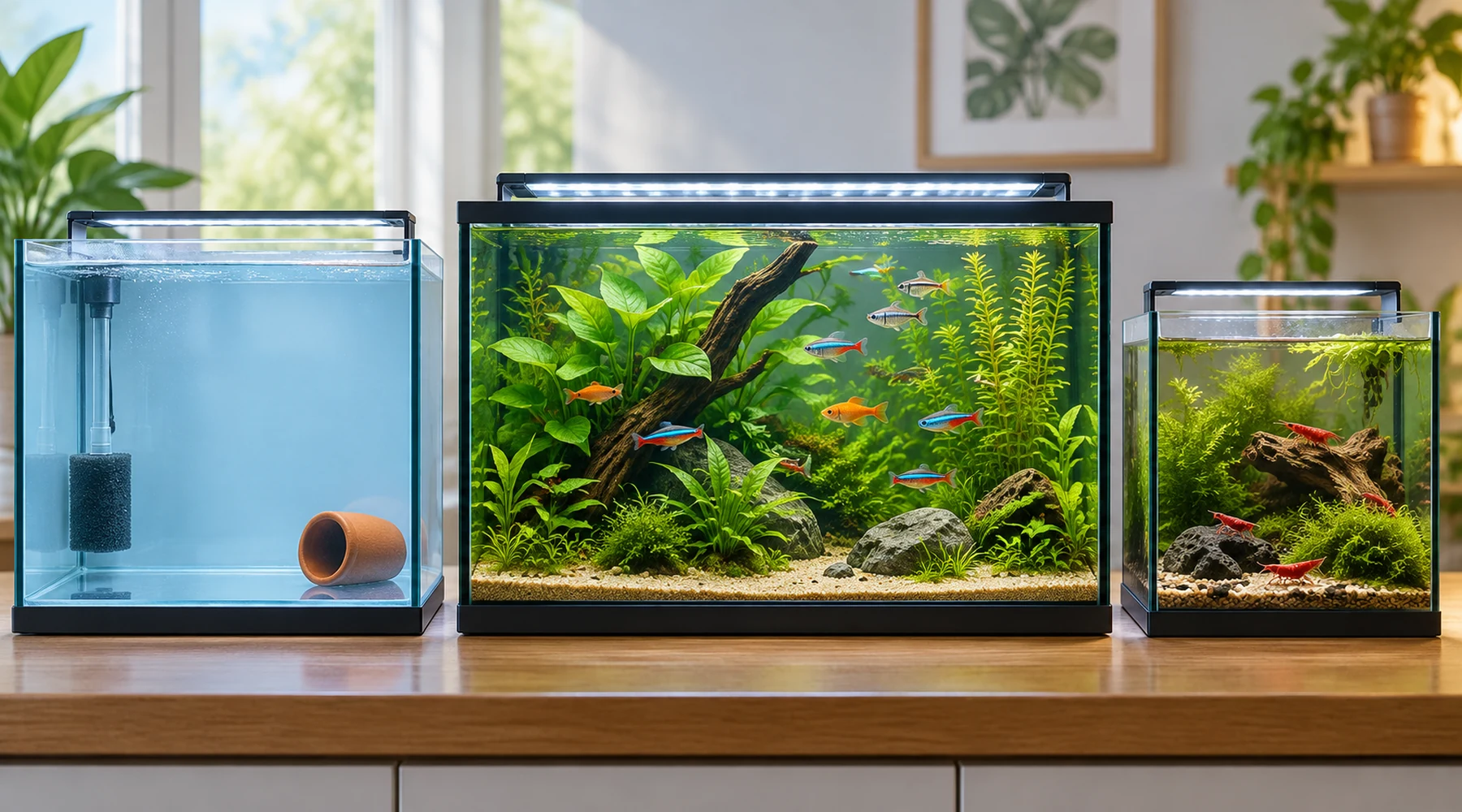
A sick tetra presents two separate questions. One is whether methylene blue matches the problem. The other is whether the tank can accept methylene blue at all. Confusing those two causes most compatibility failures.
Treatment is a pair: the chemical plus the system it enters. A bare hospital vessel and a mature planted community tank are different systems even when they hold the same species. A direction written for one does not transfer to the other. This guide treats compatibility as a property of the system, using one product label as reference and marking where evidence runs thin.
What the reference label says
Kordon's methylene blue product information describes a 2.303% aqueous solution for ornamental fish, with stated uses around fish eggs, superficial fungal problems, some external protozoans, and assistance in known nitrite or cyanide poisoning. Bacterial disease, flukes, Oodinium, and advanced fungal disease sit outside that list.
The same instructions carry the compatibility warnings. Kordon says the product should not be used in systems relying on biological filtration, that it may interfere with normal plant growth, that activated carbon removes it, and that porous rock, coral, and wood absorb it. Treatment belongs in bare vessels, silicone may stain permanently, and cleanup means a water change plus fresh carbon.
Those sentences already answer two common searches. If you ask how methylene blue affects a biological filter, the manufacturer answer is to keep it away from that filter. If you ask whether you can use methylene blue in a planted tank, the answer is that growth interference is expected. What follows explains why, and where caution must replace missing data.
Diagnosis and water quality come before this check, as described in methylene blue for aquarium fish. Concentration errors that worsen compatibility are covered in the dosing accuracy reference, and egg specific separation logic appears in the hatchery treatment guide.
Compatibility matrix
"Unknown" below is a finding, not a gap in the table. It means no controlled aquarium experiment justifies exposure, so separation is the default.
| System component | Verdict | Basis and handling |
|---|---|---|
| Mature biological filter | Avoid in display | Inhibits nitrification. One freshwater study recorded 16 days without nitrification after a single 5 mg/L exposure. Treat separately; test ammonia and nitrite in any exposed system until normal. |
| Live plants | Avoid in display | Kordon warns of growth interference. Duckweed data show reduced growth at 50 mg/L, far above treatment strength, with no controlled data for Anubias, Cryptocoryne, or Java fern at 1 to 3 mg/L. Absence of species data is not safety. |
| Shrimp, Neocaridina and Caridina | Unknown, treat as sensitive | No controlled ornamental shrimp dose data. Related crustacean data conflict, from Daphnia harm at microgram levels to penaeid tolerance far higher. Keep shrimp out of treatment water. |
| Snails | Unknown, treat as sensitive | No useful therapeutic dose data for common aquarium snails. Do not infer safety from fish dosing. |
| Crayfish and other crustaceans | Unknown, treat as sensitive | Sensitivity varies widely between taxa, so extrapolation across groups fails. Separate them. |
| Other invertebrates | Unknown, treat as sensitive | "Methylene blue invertebrates" is not one claim. Default to separation. |
| Scaleless fish, loaches, many catfish | Caution, assess separately | Pure dye thresholds are poorly characterized. Reviews call it less toxic than malachite green but note deaths in some species; available catfish trials mix dye with salt. Get species specific veterinary advice. |
| Saltwater fish, bare quarantine tank | Label includes marine fish, quarantine only | Use a fish only hospital vessel with aeration and monitoring. This does not mean reef safe. |
| Reef display, corals, live rock | Avoid | Live rock often is the biofilter, porous coral and rock absorb dye per Kordon, and marine nitrification is demonstrably vulnerable. One soft coral test at about one tenth of treatment strength does not establish safety. |
| Carbon, porous media, silicone | Remove or accept loss | Carbon strips the dye during treatment and is the specified cleanup tool after. Porous media absorb it; silicone may stain. |
| Protein skimmer | Unknown | No reliable pure dye skimmer data. Combination products that tell users to stop skimming contain other agents and prove nothing about methylene blue alone. |
A safety reference for sensitive species and invertebrates collects these unknowns in more detail.
Why the biofilter matters most
Nitrifiers process ammonia and nitrite while fish keep producing waste, so suppressing them creates a second emergency inside the first. UF/IFAS guidance on chemicals in recirculating systems lists methylene blue among biofilter inhibitors and recommends treating fish in tanks taken offline, with a large water change before reconnection.
Sensitivity varies by community. Laboratory work found one marine ammonia oxidizer inhibited at 10 parts per billion while another needed 10 parts per million, with some cells killed rather than briefly suppressed. Marine work also found impaired ammonia oxidation continuing after treatment water was replaced.
There is no general methylene blue biofilter recovery time. The 16 day figure is one freshwater result at one exposure, not a promise, and it should never be quoted as a standard interval. Treat an exposed filter as impaired until tests prove otherwise: check ammonia and nitrite daily, keep oxygen high, and ignore fading blue color as evidence. Carbon and water changes remove color; only testing shows microbial recovery. The UF/IFAS fish health guide puts water testing first when fish look sick, and its ammonia guidance notes that harmful ammonia is colorless and odorless.
Plants, shrimp, snails, and scaleless fish
For planted tanks the manufacturer warning is the strongest directly applicable evidence. The duckweed result shows the mechanism is plausible but does not set a threshold for aquarium species at treatment strength. Run treatment outside the planted display.
For shrimp and snails there is no safe dose to quote. "Is methylene blue safe for shrimp" and "is methylene blue safe for snails" both resolve to unknown, which in practice means keep them out of the dye. Do not reuse treatment water for water changes elsewhere, and keep treatment nets and siphons separate.
Scaleless fish need individual assessment. Tolerance depends on duration as well as concentration: goldfish held at 2 mg/L for 21 days showed altered growth and physiology, far longer than a 3 to 5 day course but proof that short course data do not cover long exposures. Never borrow a scaled fish dose for a loach or naked catfish, and never stack salt plus dye without advice, since combination trials do not isolate a dye threshold.
Marine systems are a separate case
"Methylene blue for saltwater fish" describes quarantine, not reef keeping. A bare fish only vessel has measured volume, aeration, and no reef structure. A reef display holds corals, mollusks, crustaceans, live rock that performs filtration, and a skimmer with uncharacterized dye interaction. Freshwater community experience does not transfer because the organisms, the filter, and the adsorption surfaces all differ.
Quarantine the fish and leave the reef untouched. Run treatment water nowhere near the display sump.
Setup that avoids most failures
Use a bare hospital vessel whenever the display holds a mature filter, plants, shrimp, snails, live rock, or coral. That covers nearly every display tank. Remove carbon during exposure, keep mechanical filtration and aeration running where the protocol allows, and measure actual treatment volume in the units the label uses. After the specified course, change water and install fresh carbon, then monitor patient and main system separately.
Before dosing, write down the problem, the exact product and concentration, the measured volume, the duration, and the observation plan. If the table above marks any tank resident as unknown, that row alone justifies a separate vessel. Decide compatibility before the water turns blue.