
Article
Methylene blue for ME/CFS: energy claims and delayed symptoms
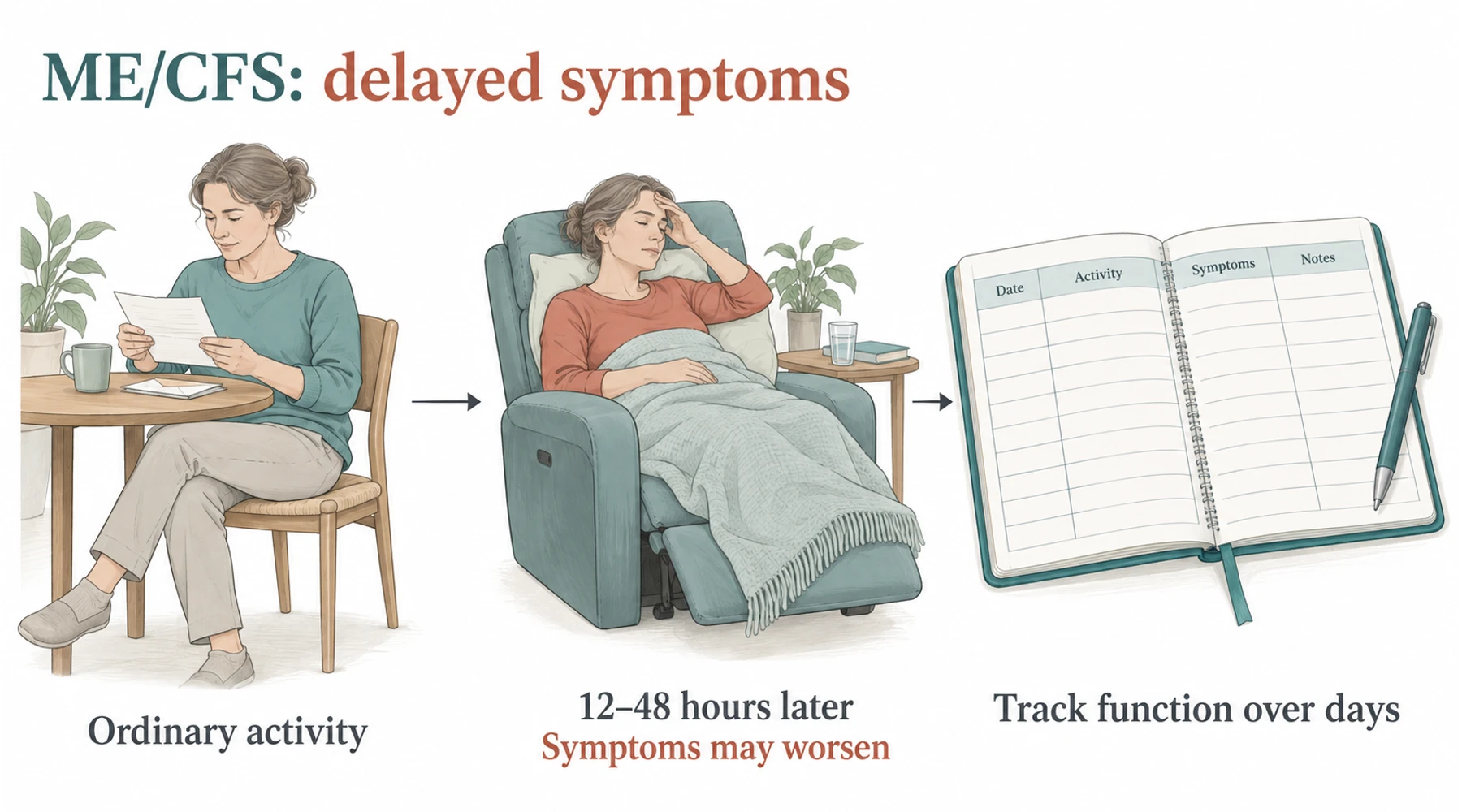
Methylene blue has not been established as an effective treatment for ME/CFS. In the literature searches for this article, no controlled patient trial was located showing that it reduces post-exertional malaise (PEM) or improves sustained daily function in this disease. Laboratory findings explain why the question interests researchers. They do not yet answer it for patients.
The most useful distinction is between feeling more energetic now and being able to do something repeatedly without becoming more unwell later. A report of the first cannot establish the second.
ME/CFS is more than persistent tiredness
Myalgic encephalomyelitis/chronic fatigue syndrome is a disabling illness with a characteristic pattern of symptoms. The diagnostic criteria summarized by CDC include a substantial reduction in pre-illness activity lasting more than six months, fatigue not substantially relieved by rest, PEM, and unrefreshing sleep. Cognitive impairment or orthostatic intolerance is also required. Orthostatic intolerance means symptoms worsen while upright.
These criteria require clinical assessment, including consideration of other explanations. Having fatigue alone does not establish ME/CFS, and results from people with ordinary tiredness cannot simply be applied to it.
PEM is a worsening of illness after physical or mental effort that the person could previously tolerate. As CDC explains in its clinical care guidance, deterioration commonly becomes apparent 12 to 48 hours later and can persist for days or weeks. An afternoon assessment may therefore miss an important consequence of that morning's activity.
What mitochondrial research actually contributes
Mitochondria help convert nutrients into usable cellular energy. Methylene blue can participate in oxidation-reduction reactions, accepting and donating electrons. In Wen and colleagues' 2011 experiments, it supported an alternative electron-transfer route from NADH to cytochrome c under experimental conditions. Cultured neuronal cells showed altered oxygen consumption, and the researchers also studied rat models of Parkinson-like injury and cerebral ischemia. These were laboratory and animal experiments, not ME/CFS treatment trials.
There is also disease-specific metabolic research. Tomas and colleagues studied blood immune cells from people with CFS and healthy controls, finding differences in oxidative phosphorylation, particularly maximal respiration. The endpoint was how sampled cells behaved in laboratory assays. Patients were not given methylene blue, and the study did not measure improvement in PEM after treatment.
Other findings complicate a simple “low energy production” explanation. In Fluge and colleagues' study of 200 patients and 102 healthy participants, amino-acid patterns suggested altered energy metabolism. Muscle-cell cultures exposed to patient serum showed increased mitochondrial respiration alongside excessive lactate secretion. Different cells and experimental conditions can produce different patterns. “More respiration” is consequently not a self-explanatory marker of recovery.
The inference linking these studies to treatment contains an untested step: a drug that changes electron transfer must also improve the relevant disease process, in the relevant tissues, without harms that offset benefit. The broader mitochondrial claims about methylene blue need that same separation between mechanism and outcome.
Evidence-to-outcome table
| Evidence or claim | What it can establish | What is still needed for ME/CFS |
|---|---|---|
| Methylene blue changes respiration in neuronal cells | A biochemical effect in a defined laboratory system | Evidence that the effect improves illness rather than only changing an assay |
| Patient blood cells show bioenergetic differences | An association between disease status and cellular measurements | A treatment comparison showing clinically meaningful benefit |
| Someone reports greater alertness after taking it | Their experience at that time | Delayed symptom assessment, adverse effects, and function over repeated days |
| A fatigue score improves | A change in a specified symptom measure | Whether PEM, sleep, cognition, and necessary daily activities also improve |
| Fewer crashes occur while activity falls substantially | A change occurring alongside reduced demands | Whether improvement reflects activity adaptation, treatment, natural variation, or several factors |
The Phoenix Rising discussion about methylene blue illustrates patient questions about experience, safety, and product quality. Such conversations can identify concerns worth studying. They lack the controlled comparison and consistent follow-up needed to determine treatment effectiveness.
Assess the following days, not just the good hour
Consider a hypothetical person who feels clearer on Monday and spends longer handling correspondence. On Tuesday they need help preparing food; on Wednesday concentration remains worse than usual. Calling Monday an improvement without recording Tuesday and Wednesday would discard clinically important information. It would also be premature to attribute the deterioration to either a substance or the extra activity without considering the full sequence.
Useful outcomes include the severity and duration of PEM, the ability to repeat personally important activities, recovery time, and support needed. A person may value reading a short message or washing independently more than a change in a laboratory number. Those priorities should shape any clinical discussion.
For activity management, NICE recommends an individualized approach within current energy limits and advises against programmes using fixed incremental increases in exercise. Feeling temporarily better does not justify testing the limit by pushing harder.
An activity and delayed-symptom diary
Use the printable text diary to document ordinary life for a clinician discussion. It is an observation aid, not a diagnostic score or a methylene-blue trial plan. Record only what is manageable. A caregiver can help, and missing entries are acceptable.
Choose two or three personally useful markers, such as reading tolerance, preparing food, or assistance with washing. Describe what actually happened instead of performing a task to measure capacity. Record physical, cognitive, emotional, sensory, and upright demands when relevant. Include rest and any changes already made to medicines or routines.
| Time point | Activity and context | Symptoms and function |
|---|---|---|
| Before an ordinary activity | Date/time; recent activity; sleep | Usual symptoms today; assistance already needed |
| During or soon afterward | What happened; approximate duration; sitting, standing, or reclining | Immediate symptoms; task completed, shortened, or abandoned |
| Next day | New demands and rest | New or worse symptoms; onset time; changes in daily abilities |
| Second day | New demands and rest | Continuing or delayed worsening; help needed |
| Later days if needed | Brief daily context | Return to usual baseline, or ongoing change |
Bring the sequence, including days that look unchanged, to the appointment. Ask whether apparent improvements occurred with similar demands, greater assistance, or substantially more rest. An individual diary cannot prove causation, but it can make a short consultation more informative.
Safety belongs in the treatment question
Methylene blue is pharmacologically active. The U.S. prescribing information for intravenous PROVAYBLUE concerns acquired methemoglobinemia, not ME/CFS. It warns about serious serotonin syndrome with serotonergic medicines and opioids, and contraindicates use in G6PD deficiency because of hemolytic anemia risk. This injection label does not validate an oral self-treatment regimen.
Bring a complete medication and supplement list to a clinician discussion about methylene blue. Do not stop prescribed treatment to make room for it. The question to resolve is whether disease-specific evidence supports a meaningful benefit for you, with a way to recognize delayed worsening and relevant adverse effects.