
Article
Methylene blue for COPD and low oxygen: what the evidence supports
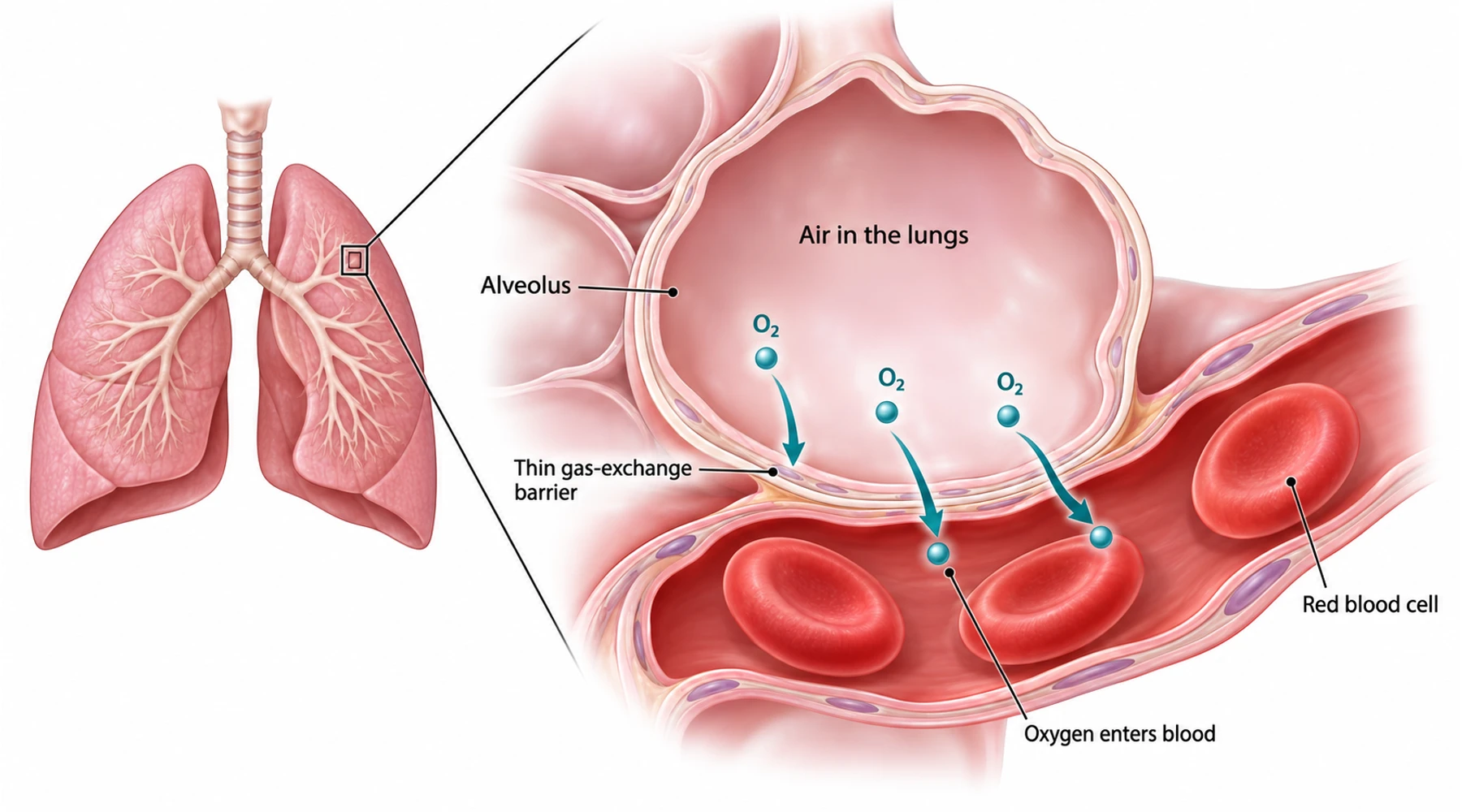
Methylene blue is not an established treatment for COPD, emphysema, or ordinary COPD-related low blood oxygen. Searches for this article did not locate a controlled patient trial demonstrating that it improves COPD breathlessness, prevents exacerbations, repairs emphysema, or reduces a prescribed oxygen requirement. That is a statement about the evidence located, not proof that every possible study has been excluded.
The confusion starts with the phrase “helps oxygen.” Oxygen must enter the lungs, cross into blood, travel on hemoglobin, and reach cells that use it. A fingertip device then estimates one aspect of that process. These steps can fail for different reasons. Methylene blue's medical use for a particular hemoglobin disorder does not make it a general remedy for a low oxygen reading.
Four different questions behind an oxygen claim
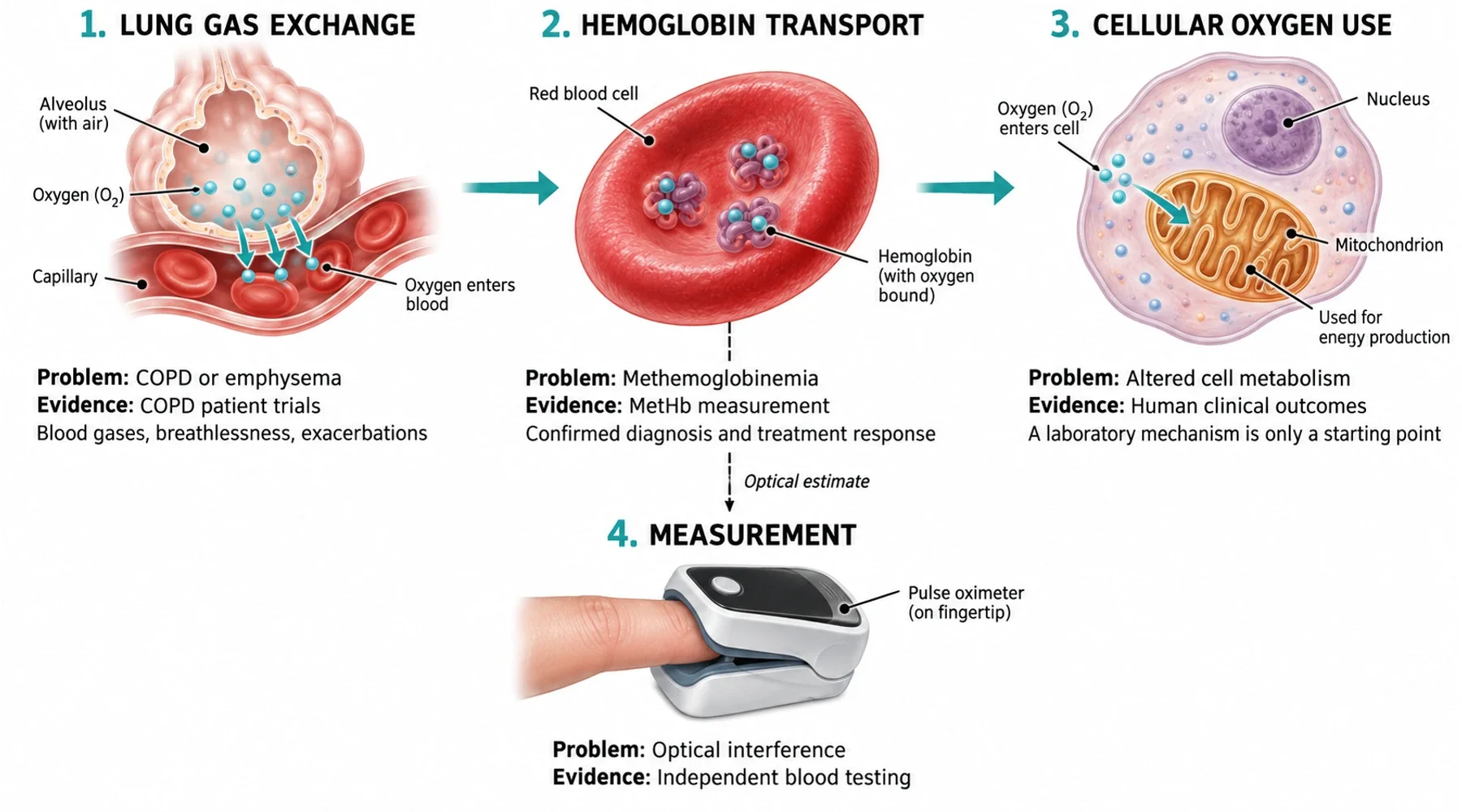
Oxygen-pathway evidence map. The upper route follows oxygen from lungs to cells. The measurement branch observes blood; it is not another oxygen-delivery step. This original conceptual illustration summarizes the distinctions explained below and is not a study result.
| Part of the pathway | What a claim must demonstrate |
|---|---|
| Lung gas exchange | In people with COPD, meaningful improvement in breathlessness, exercise capacity, blood gases, or exacerbations under comparable treatment conditions. |
| Hemoglobin transport | A diagnosed hemoglobin problem, such as elevated methemoglobin, followed by an appropriate biochemical and clinical response. |
| Cellular oxygen use | Patient benefit from a defined intervention. A change in a cultured cell's oxygen consumption is insufficient. |
| Measurement | Agreement with appropriate independent blood testing, accounting for optical interference and measurement conditions. |
1. COPD affects airflow and lung gas exchange
In COPD, airways may become narrowed and obstructed by mucus. In emphysema, damage to air-sac walls reduces the functional gas-exchange surface. The NHLBI explanation of COPD describes these structural problems. Air reaching a region of lung also has to match blood flowing through that region for efficient oxygen uptake.
Changing the chemistry of hemoglobin cannot establish that damaged air sacs have recovered. Nor does a person feeling more energetic demonstrate improved airflow. Those claims require their own measurements, such as spirometry, standardized walking tests, symptom scores, or blood-gas assessment.
The treatment question is also broader than oxygen saturation. Breathlessness can reflect the effort of breathing, and people with COPD can have additional conditions contributing to symptoms. A reassuring device number does not explain persistent breathlessness.
The NHLBI treatment guide describes bronchodilators, selected anti-inflammatory treatments, pulmonary rehabilitation, and oxygen therapy for people who qualify. These interventions address different needs. Retail methylene blue should not replace prescribed oxygen, inhalers, or assessment of worsening breathing.
2. Methemoglobinemia is a separate blood disorder
Hemoglobin normally carries oxygen using iron in its ferrous state. Methemoglobin contains oxidized, ferric iron that cannot bind oxygen normally. Enough methemoglobin can impair oxygen delivery even when oxygen reaches the lungs.
The US prescribing information for intravenous ProvayBlue identifies acquired methemoglobinemia as its indication. Methylene blue participates in reducing methemoglobin back to functional hemoglobin. This is a defined biochemical target, not a general treatment for chronic lung damage. The methemoglobinemia treatment explanation covers that distinction in more detail.
A person can have both disorders. A 2025 case report involving phenazopyridine exposure and COPD described a 67-year-old man with methemoglobin of 14.5%. After methylene blue, the reported level fell to 9.5%. He also received ascorbic acid, oxygen, bronchodilators, and steroids. This was one patient with a drug-associated blood disorder and concurrent COPD, without a control group. It does not establish that methylene blue treated his underlying COPD or that it could replace the other treatments.
The distinction affects testing. Blood-gas oxygen pressure, often called PaO₂, measures dissolved oxygen. It does not by itself quantify how much hemoglobin is dysfunctional. Laboratory co-oximetry can measure hemoglobin fractions, including methemoglobin. Clinicians interpret those results alongside symptoms, exposures, and the oxygen being administered.
3. Mitochondrial experiments do not establish a COPD benefit
Mitochondria use oxygen during cellular energy production. Researchers have investigated methylene blue as an alternative electron carrier. For example, the experimental study of mitochondrial electron transfer reported increased oxygen consumption in cultured neuronal cells and examined neurological animal models. These were not COPD patient outcomes.
Increased oxygen consumption means cells used more oxygen under the experimental conditions. It does not mean a damaged lung absorbed more oxygen, that the blood's saturation increased, or that supplemental oxygen became unnecessary. A proposed downstream mechanism still needs clinical testing in the population for whom the benefit is claimed.
Search results require another distinction: methylene blue may appear in a paper as a dye. In a 2020 mouse pulmonary-delivery study, researchers used it to check where administered liquid reached. The emphysema treatment being assessed was all-trans-retinoic acid. Reading only the terms “methylene blue,” “mice,” and “emphysema” could wrongly turn a delivery-method experiment into a treatment claim.
Similarly, patient discussion of methylene blue alongside red light identifies a question people want answered. It supplies no controlled evidence that the combination improves COPD.
4. The oxygen reading can change without the lung changing
A conventional pulse oximeter uses light to estimate oxygen saturation, reported as SpO₂. It does not directly measure breathing effort, carbon dioxide, or cellular energy production. The FDA's pulse-oximeter guidance notes that circulation, skin pigmentation, skin temperature, and other factors can affect accuracy.
Methylene blue itself can interfere with this optical measurement. Its prescribing information warns that blood containing the dye may produce an underestimated saturation reading, particularly during or shortly after intravenous administration. It recommends an arterial sample tested by an alternative method when saturation assessment is needed in that setting.
That warning does not establish a predictable effect for every oral retail product. It also does not mean a new low reading can safely be dismissed as dye interference. Real oxygen problems and measurement interference can coexist. Tell the treating team about methylene blue use so they can choose and interpret testing appropriately. The guide to methylene blue and oxygen-monitor readings explains the measurement issue separately.
An apparent rise after taking a product is equally difficult to interpret. Resting after activity, changing oxygen delivery, warming a cold hand, or repositioning the sensor can change the comparison. A before-and-after home reading cannot isolate a drug effect.
What to do with worsening breathing
Follow the oxygen and exacerbation plan provided by your respiratory team. Seek prompt assessment for an unexpected persistent fall below your personal target or a meaningful worsening of symptoms. Do not adjust treatment around an online methylene-blue protocol.
The NHLBI emergency symptom guidance advises emergency help for difficulty catching your breath or talking, blue or gray lips, reduced alertness, or symptoms not responding to recommended treatment. Call your local emergency number rather than waiting to test a supplement.
Methylene blue also has relevant risks: its prescribing information warns about serious serotonin toxicity with certain medicines and severe hemolysis in G6PD deficiency. Bring a complete medication and product list to the consultation. The useful question is specific: what explains the breathing problem, how was it measured, and which treatment has evidence for that diagnosis?